
Hey there! I'm part of a wireless towers supplier team, and I'm super stoked to chat with you about how wireless towers manage to do their thing in areas with not - so - great soil conditions. It's a topic that doesn't get as much buzz as it should, but it's crucial for making sure our wireless networks are up and running smoothly, no matter the ground beneath them.
Understanding Poor Soil Conditions
First off, let's talk about what we mean by "poor soil conditions." There are a bunch of factors that can make soil less than ideal for building wireless towers. One common issue is soft soil. Soft soil doesn't have the strength to hold up heavy structures, like our tall, bulky wireless towers. It's kind of like trying to build a sandcastle at the edge of the water; the ground just can't support it well.
Another problem is soil with high water content, like in marshy areas. The water in the soil can cause erosion and make the ground unstable. And then there are areas with expansive soils. These soils expand when they get wet and shrink when they dry out. This constant expansion and shrinkage can put a lot of stress on the tower's foundation, potentially leading to cracks and leaning.
The Basics of How Wireless Towers Work
Before we dive into how they work in poor soil, let's quickly go over how wireless towers work in general. Wireless towers are like the hubs of our wireless communication network. They send and receive signals from devices like our smartphones, tablets, and laptops. The signals are transmitted through radio waves, which are a type of electromagnetic radiation.
The tower is equipped with antennas that pick up these radio waves from our devices and then send them to a base station. The base station then connects these signals to the wider network, like the internet or a phone network. And vice versa, the base station sends signals to the tower, which then broadcasts them out to our devices.
Challenges in Poor Soil
Now, when it comes to poor soil conditions, the biggest challenge is building a stable foundation. A tower's foundation is like its feet. If it's not stable, the whole tower can be at risk. In soft soil, the tower can sink over time. In areas with high water content, the foundation can corrode, weakening its structure. And in expansive soils, the constant movement of the ground can cause the foundation to crack or shift.
These issues can lead to a whole host of problems. A leaning tower can affect the accuracy of the antennas, reducing the quality of the signals. In severe cases, a tower could even collapse, which is not only a huge safety hazard but also a major setback for the wireless network in that area.
Solutions for Poor Soil Conditions
Deep Foundations
One of the most common solutions is to use deep foundations. Instead of just digging a shallow hole and pouring concrete like you would in normal soil conditions, deep foundations go much deeper into the ground. Piles are a popular type of deep foundation. These are long, cylindrical structures made of materials like steel or concrete that are driven into the ground until they reach a more stable layer of soil or rock.
For example, in areas with soft soil, piles can transfer the weight of the tower from the weak surface soil to a stronger layer below. This helps prevent the tower from sinking. And because they're buried deep, they're less affected by surface - level soil issues like water erosion.
Soil Improvement
Another approach is to improve the soil itself. There are several methods for this. One is soil compaction. This involves using heavy machinery to compress the soil, making it denser and more stable. In some cases, additives can be mixed with the soil to improve its properties. For instance, lime can be added to expansive soils to reduce their tendency to expand and shrink.
Specialized Tower Designs
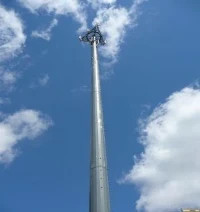
We also have specialized tower designs for poor soil conditions. For example, the Transmission High - voltage Wireless Tower can be engineered to be more lightweight or have a more distributed weight. This reduces the pressure on the foundation and makes it more stable in less - than - ideal soil.
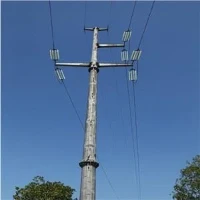
The 3/4 Leggeds Steel Self Supporting Tower is another great option. Its design provides more stability compared to some other tower types. The multiple legs distribute the weight evenly across the foundation, which is especially useful in areas where the soil is not uniformly stable.
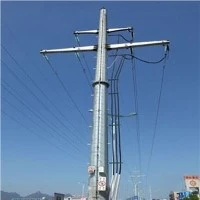
And the Power Transmission Line Steel Tower can be customized with features that make it more resilient to poor soil conditions. For example, it can have a reinforced base or a more flexible structure that can withstand some movement in the ground.
Monitoring and Maintenance
Even after we've built a wireless tower in an area with poor soil, the job isn't done. We need to constantly monitor the tower and its foundation to make sure everything is still okay. There are various monitoring techniques, like using sensors to measure the tilt of the tower, the moisture content in the soil, and the stress on the foundation.
Regular maintenance is also key. If we notice any issues with the foundation, like cracks or signs of corrosion, we need to address them right away. This could involve repairing the foundation, adding additional support, or even replacing parts of the tower if necessary.


Why Our Supplier Is the Right Choice
At our wireless towers supplier, we've got years of experience dealing with all kinds of soil conditions, especially the poor ones. We've got a team of experts who know how to analyze the soil, come up with the best foundation solutions, and design the right tower for the job.
We use the latest technology and materials to ensure that our towers are not only stable but also efficient. Our towers are built to last, even in the toughest soil conditions, so you can count on them to keep your wireless network up and running.
If you're in the market for a wireless tower, especially for an area with poor soil conditions, we'd love to have a chat with you. We can provide you with a customized solution that meets your specific needs and budget. So, don't hesitate to reach out and start a conversation about your wireless tower requirements.
References
- "Foundation Design for Wireless Communication Towers in Challenging Soil Conditions" by Smith, J. et al.
- "Soil Mechanics for Tower Structures" published by the Institute of Civil Engineers.
- "Advanced Tower Design and Construction in Poor Soil" by Johnson, M.