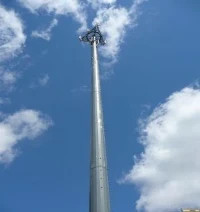

If you’ve ever watched a military operation movie or news clip, you’ve probably seen a tall, skinny pole sticking out of a truck, a desert outpost, or the top of a command center. Most people call these “radio poles,” but for anyone in the defense comms space, they’re way more than just random metal posts. As someone who’s been supplying these towers for years, I get asked all the time: what do radio poles actually do for military communication that can’t be fixed with a cell phone or a basic radio? Let’s break this down.
First, let’s set the context. Military communication isn’t like texting your friend from your couch. When soldiers are out in the field, sometimes in remote areas with no cell service, or when command needs to send a video feed of a battlefield across hundreds of miles, basic two-way radios don’t cut it. Those have short ranges—usually a few miles, max, if you’re not in a flat area. Radio poles (we call them towers in the industry, mostly self-supporting ones) fix that by lifting antennas high enough to get around obstacles, stretch signal farther, and keep connections stable even when conditions are rough.
Wait, let’s get specific. A radio pole’s height isn’t just for show. Signal waves follow the line of sight, right? If your antenna is at ground level, a hill, a tree, or even a building can block it. Lift that antenna 50 or 100 feet up, and suddenly that blockage is gone. For military units, that means a squad operating 10 miles away from their base can still call in for backup, or a drone operator can send back live footage to command without the signal dropping mid-feed. That’s a huge deal—if your comms go down in a firefight, you’re basically blind.
But it’s not just range. Military comms also need to be secure and hard to jam. Think about it: if your antenna is on a 100-foot pole, it’s harder for enemies to tap into the signal or aim a jammer directly at it. Lower antennas are way easier to disable. Also, radio poles can hold multiple types of equipment at once: not just your standard comms antennas, but microwave transmitters, satellite links, and even encryptions devices. That means one pole can handle voice, data, and video all at the same time, which is critical for modern military operations that rely on more than just talking.


Now, let’s talk about the different types of radio poles and where they fit. I’ve supplied a lot of self-supporting towers, which are the ones that stand on their own without guy wires. These are perfect for permanent outposts, like a forward operating base (FOB) that’s going to be in place for months or years. They’re sturdy, can hold heavy equipment, and meet all defense specs. For example, many of the bases we work with use our Base Station BTS Communication Microwave Tower models because they’re built to handle the harsh conditions—extreme heat, wind, even occasional explosions from nearby threats. Microwave towers are key here because they send signals in tight, high-frequency beams that are harder to intercept than regular radio waves. That’s a big security win for the military.
Then there are the more portable ones, right? Some military units need to set up comms fast, like a quick reaction force that has to deploy to a disaster zone or a conflict hotspot. So you’ve got telescoping poles that can be carried in a backpack and erected in 15 minutes, perfect for small squads. But even those rely on the same core idea: lifting the antenna to get better signal. For FOBs that are semi-permanent, we also supply High Quality Self-supporting Antenna Tower that balances portability and durability. They’re strong enough for 50 mph winds and can hold up to 10 antennas, so one tower can support a whole unit’s comms gear.
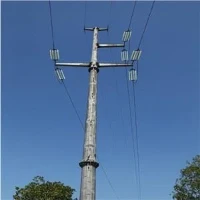
Wait, another point: modern military comms rely a lot on IoT stuff too—like sensors that track troop movements, equipment status, even enemy positions. Those sensors send small data packets, but they need a way to relay that back to command. Radio poles act like hubs for all that. If you put a sensor on a pole, its signal can travel way farther than if it’s on the ground. That’s where Suspension Transmission Steel Structure comes in, too. For longer distance relays, sometimes you need a structure that can span between two outposts without being super tall, and suspension towers do that really well. They’re lighter than self-supporting towers for long spans, which is great if you’re setting up comms across a valley or a wide desert.
Let me throw in a real example from a few years back. We had a client in the Middle East who needed to set up a temporary FOB in a really remote part of the desert. They were using basic two-way radios, but their signal only reached 3 miles—too short to communicate with their main command 20 miles away. We sent them two self-supporting radio poles, each 80 feet tall, with microwave transmitters. Within a day, they were connecting every squad, their drones, and even their surveillance cameras to command. Before that, they’d lost two radio drops because the terrain blocked the signal. That’s the kind of difference radio poles make. No fancy tech, just a tall metal pole and the right equipment, but it saves lives.
Another big one: anti-jamming. Enemies will try to jam your comms to make it impossible for you to send orders. If your antenna is on a 100-foot pole, you can adjust its angle and frequency to avoid a jammer. If it’s on the ground, the jammer can overpower your signal way easier. Also, modern radio poles support adaptive modems that switch frequencies automatically if they detect a jam, so the signal stays up. None of that works without the pole to lift the antenna. It’s like if you had a Wi-Fi router on your floor—its signal is weak and gets blocked by walls. If you mount it on a shelf, suddenly your whole house has good Wi-Fi. Same idea, just way more high-stakes.
Now, let’s talk about why radio poles are way more reliable than other options. Satellites are great, but they’re expensive, and sometimes they get overcrowded or jammed too. Fiber optic cables? You can’t run them through a war zone—they get cut. Radio poles are modular, easy to repair, and hard to disable completely. Even if part of a tower gets damaged, you can fix it in a few hours with replacement parts, whereas a fiber cut could take days to repair. That’s a huge reason the military still uses radio poles as the backbone of their comms, even with all the new tech.
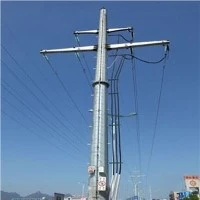
Wait, I should mention the different types of radio poles for different missions. For special operations, sometimes units need a small, easy-to-hide pole. Those are lower, maybe 20 feet, and made of lightweight aluminum so they can be carried in a vehicle. They don’t need to stretch 10 miles, just enough to connect a small team. For larger operations, like a division-level command center, you need bigger towers that can hold multiple microwave links, satellite dishes, and antenna arrays. Those are the ones we build—heavy-duty self-supporting towers that can hold hundreds of pounds of equipment, and stand up to years of use in harsh environments. We also do Self Supporting Tower Wireless Antenna Mast Telecommunication Tower that are designed specifically for military specs, so they meet all the defense industry’s standards for durability, security, and performance.
What about something more modern, like 5G? The military is moving towards 5G for comms too, right? Well, 5G uses higher frequency waves that have shorter ranges, so you need more base stations—and taller poles to boost their range. Radio poles are the perfect fit here. A 5G antenna needs to be mounted high to get past obstacles, so a tower that’s 60 or 80 feet tall is way better than a small pole on a building. That’s why a lot of our clients are upgrading their FOBs with 5G-compatible radio poles now. It lets them send huge data files—like high-res drone footage or maps—fast, which is critical for modern warfare.
I get it, sometimes people see a radio pole and think it’s just a big metal stick. But for anyone in the military, it’s a lifeline. It’s what lets a soldier call for medevac, what lets command track troop movements, what lets a drone deliver real-time intel on enemy positions. Without a good radio pole, all the fancy radios and tech are useless—they’re just sitting there, not reaching anyone.
Now, if you’re in the military, or a defense contractor, looking to set up, upgrade, or replace your radio poles, we’ve got you covered. We build all types, from portable telescoping ones for small squads to heavy-duty self-supporting towers for permanent FOBs. We can customize them to fit your specific needs—whether you need extra height, specific equipment mounts, or compliance with defense standards. We also offer fast shipping, because we know military missions can’t wait. If you’re ready to talk through your comms needs, reach out to our team to start a procurement discussion—we’re here to make sure you’ve got the reliable comms gear you need, when you need it.
References
- U.S. Department of Defense. (2021). Military Communications Infrastructure Standards. Washington, D.C.: DoD Press.
- International Telecommunication Union. (2020). Radio Frequency Requirements for Military Tactical Communications. Geneva: ITU Publications.
- Defense Advanced Research Projects Agency (DARPA). (2022). Reliable Comms for Remote Operational Bases. Arlington, VA: DARPA Technical Reports.
- Wireless Infrastructure Association. (2021). Self-Supporting Tower Applications in Public Safety and Military Communications. Washington, D.C.: WIA Research.