
If you’re in the market for reliable, durable infrastructure that checks multiple boxes, steel monopoles are likely top of mind—especially if you work with a supplier who knows their way around this versatile steel product. As someone who’s been in the steel monopole supply game for years, I’ve seen how these structures go far beyond just “tall poles”; they’re workhorses that power everything from wireless communication to energy distribution, and even everyday public amenities. Let’s break down the main uses, why they stand out, and how our products fit into each.
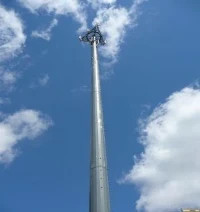
First up, wireless communication—this is probably the use most people associate with steel monopoles, and for good reason. Think about your cell phone service: whether you’re scrolling TikTok in a small town or video calling from a suburban coffee shop, that signal comes from a cell tower. Steel monopoles are a go-to here because they’re sleek, compact, and less obtrusive than the old lattice-style towers that used to dot the landscape. Not only that, but they can house multiple types of antennas—for 5G, 4G, even small cell tech—all in one pole. If you’re looking for a specific type for wireless needs, our Gay Monopole is a great example; it’s designed to meet industry safety standards for radio frequency emissions and can support heavy antenna loads without sagging or leaning. We also do custom sizes, like our 100 ft Monopole Tower, which is perfect for filling coverage gaps in areas where space is tight but signal strength is non-negotiable. One thing I always tell clients in telecom: don’t skimp on material quality. That’s why all our monopoles are hot-dip galvanized, which protects against rust and corrosion even in humid or coastal areas. If you’re researching the right antenna pole, check out our Hot Dip Galvanized Steel Monopole Antenna Pole Wifi Telecommunication Tower page for specs that back up that durability.
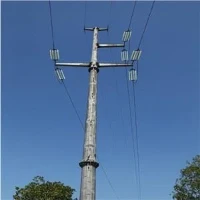
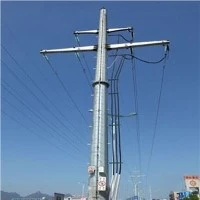
Next, energy transmission and distribution. You might not notice them, but steel monopoles are popping up more and more in power grids, especially for low to medium voltage lines. Traditional transmission towers are huge, require lots of land, and are expensive to build in dense areas or where terrain is tricky. Steel monopoles, though, are lighter, easier to install, and take up way less ground space. They’re especially useful for sub-transmission lines, rural electrification projects, and even connecting renewable energy sources—like wind farms or solar arrays—to the main grid. Our Unipolar Transmission Tower Design is tailored for these applications: it uses a single steel structure to support conductors, insulators, and other hardware, cutting down on material and installation time compared to traditional towers. I’ve worked with several utility companies that switched to monopoles for their new projects because they don’t need as much clearing of trees or land, which saves both time and environmental hassle. Plus, their modular design means we can adjust them to fit specific voltage requirements, so you don’t have to overbuild for the job.


Then there’s public lighting and smart city infrastructure. Wait, did you know steel monopoles double as light poles? Yeah, it’s a game-changer for cities and municipalities looking to modernize their streets. Instead of having separate light poles and communication towers, you can combine both into one structure—cuts down on clutter, reduces maintenance, and even lowers costs. Our Camouflaged Outdoor Light Communication Tower is a perfect example of that: it looks like a regular street light, but it’s got built-in antennas for Wi-Fi, public safety radios, and even smart city sensors for things like traffic flow or air quality. This is super popular in residential neighborhoods, park areas, and downtown districts where aesthetics matter a lot—no one wants a eyesore tower ruining their street view. We’ve also supplied these to university campuses and shopping centers, where they’re used to provide free Wi-Fi while lighting parking lots and walkways. The hot-dip galvanizing we do on all our monopoles makes them weather-resistant, so they hold up to rain, snow, and harsh sunlight without needing constant touch-ups.
Another underrated use: transportation infrastructure. Steel monopoles show up in highway projects, too. They’re used for road sign supports, traffic signal arms, and even variable message signs (those big digital signs that tell you about accidents or speed limits). Because they’re strong and easy to install along busy roads, they don’t require long closures— a big plus for transportation departments trying to minimize disruptions. We’ve built monopoles that hold heavy traffic signals on interstates and smaller side streets, and their design means they can handle wind loads from passing trucks without bending. Some clients also use them to mount surveillance cameras, adding another layer of safety to roads and public areas.
So why steel monopoles, not wood or concrete? Let’s be real—wood rots, especially in damp areas, and concrete is heavy, hard to move, and takes longer to set up. Steel monopoles are lightweight for their strength, can be fabricated in a factory and shipped to the site (cutting down on construction time), and their galvanized coating means they last 30+ years with minimal maintenance. That’s a big selling point for any project manager looking at long-term costs.
Now, if you’re thinking about a project that needs steel monopoles—whether it’s expanding a cell network, upgrading your power grid, building a smart city, or fixing up highway infrastructure—we can help. We work with all kinds of clients: telecom companies, utility providers, municipalities, and even private developers. We can customize the size, height, and features to fit your exact needs, from the 100 ft monopole for small cell coverage to taller structures for long-range communication. All our products meet industry safety standards, so you don’t have to worry about compliance issues.
If you’re ready to talk through your project, need a quote, or have questions about which monopole works best for you, reach out. We’re here to make the process easy, from initial design to delivery. Don’t hesitate to connect with our team to discuss your steel monopole needs.
References:
- Steel Monopole Design and Installation Guidelines, Telecommunications Industry Association (TIA)
- Hot-Dip Galvanizing Standards for Steel Structures, American Galvanizers Association (AGA)
- Unipolar Transmission Tower Applications, Institute of Electrical and Electronics Engineers (IEEE)
- Camouflaged Monopole Towers for Urban Infrastructure, National Association of Tower Erectors (NATE)