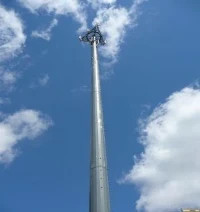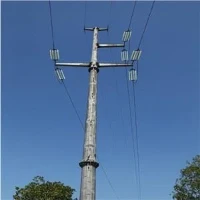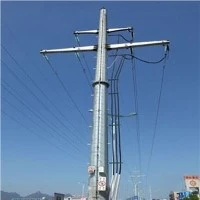

If you've ever driven through a rural area, cruised along a highway, or even stepped into a big city, you've probably spotted radio poles. Sometimes they're tall, sleek structures standing alone, other times they're part of a cluster of gear keeping our phones connected, our radios on air, and emergency services online. As a radio pole supplier, I talk to folks almost every week who are planning their first installation or upgrading an old setup, and one question comes up more than any other: "What do I actually need to get this thing up safely, legally, and long-term?"
This isn't just about grabbing a pole and hiring a crew to hammer it in-there's a lot of moving parts, and skipping a single step can lead to delays, extra costs, or even big safety headaches. I've seen new clients skip a soil test and end up with a tower leaning within a year, or forget to check local zoning rules and have to tear a perfectly good structure down. Today, I'm breaking down the real, practical installation requirements I've learned over 10+ years in this game, no confusing jargon, just what you need to know to get your radio pole up and running right.
First up, let's talk location-this is make-or-break. You can have the fanciest pole on the market, but if it's in the wrong spot, it's useless. I always start by telling clients to nail down two things right away: line of sight and local rules.


Line of sight sounds basic, but it's non-negotiable for radio signals. If your pole is supposed to send a signal to a town 20 miles away, you can't put it behind a hill or a cluster of tall trees. Even a small stand of mature oak trees can weaken or block a signal enough to make your whole installation pointless. We've had clients try to save a few bucks on land by picking a spot that's slightly out of line, and by the time they test the signal, they're already 3 months behind schedule and looking to regrade the whole site.
Then there's zoning and local permits-this is where most newbies mess up. Every county, city, and even small town has different rules for how tall a radio pole can be, where it can go on your property, and how much setback it needs from roads, homes, or other structures. Some areas ban poles over 30 feet near residential neighborhoods, while others require a special variance for anything over 50 feet. Don't wait until your pole is delivered to apply for a permit-most places take 4-8 weeks to process these, and if you get denied, you're stuck with a big pile of steel sitting on your lot. Pro tip: Hit up your local planning department before you even order your pole-they can tell you exactly what's allowed, and sometimes even point you to zones that are zoned specifically for wireless infrastructure, which cuts a lot of red tape.
Next up, the foundation-this is the unsung hero of radio pole installations. The foundation is what keeps your pole standing through wind, rain, ice, even that random summer thunderstorm that hits 70 mph out of nowhere. There's no one-size-fits-all here, and it totally depends on your pole type, height, and local soil.
Let's say you're going with a self-supporting tower-these are the ones that stand alone, no guy wires needed, super common for urban or small-site setups. For these, the foundation is usually a thick concrete pad, often with rebar or anchor bolts embedded to lock the tower base in place. The size of that pad? It's not just guessing-we calculate it based on how tall your tower is. For example, our 50m Self-supporting Antenna Tower has specific foundation specs that call for a 12-foot deep, 10-foot square concrete pad, because that height needs enough weight and stability to handle wind loads. If you skimp on the pad size, the tower will shift over time, which messes up both the structure and the signal.
Speaking of soil, that's a huge factor I mentioned earlier. If your site has soft, sandy soil, you can't use a smaller pad-you might need to use caissons (deep concrete pipes drilled into the ground) to anchor the tower deeper. If you have rocky soil, you'll need to account for extra concrete to pour around the bedrock so the base doesn't shift. We recently had a client in Florida where the soil was mostly marshy, so we had to add extra steel reinforcement to the foundation and extend the pad by 2 feet on all sides-something we would've missed if we didn't do a soil test first.
Guyed poles, by the way, have different foundation needs. They use steel cables (guy wires) anchored to ground anchors to keep the pole stable, so the anchors need to be rated for the same wind loads as the pole. For example, a 100-foot guyed radio pole might need four ground anchors, each buried 6 feet deep and rated for 10,000 pounds of pull, to hold the guy wires tight. No cutting corners here-if an anchor pulls out during a storm, your pole is going down.
Once you've got location and foundation sorted, it's time to talk wind and load ratings. This isn't just for pole nerds-every radio pole is built to handle specific weather conditions, and you need to pick one that matches your local climate.
If you're in the Great Plains, where tornado winds can hit 120 mph, you can't use a pole rated for 80 mph winds. If you're in the Pacific Northwest, where ice storms are common, you need to account for the weight of ice building up on the pole and antennas. Wind load is calculated in "psf" (pounds per square foot), and your pole's specs will list this. Most of our clients go with a pole rated for 110 psf or higher these days, just to be safe, even if local rules only require 90 psf-better to overbuild than replace a pole after one bad storm.
For self-supporting towers, like the Self Supporting Radio Tower we offer, we always make sure the load rating is tailored to your site. That 50m tower I mentioned earlier? It's rated for up to 100 mph winds with ice buildup, which works for most midwestern and eastern US sites. If you're in a more extreme area, we can upgrade the steel or add extra bracing to handle higher loads. Same with our High Quality Self-supporting Antenna Tower-we engineer each one to match local weather data, so you don't have to worry about it.
Then there's the electrical stuff-you can't install a radio pole without power, right? All the gear on top of the pole (antennas, transmitters, monitoring systems) needs electricity, and you have to plan for that during installation. Most poles run off grid power, so you'll need to run a dedicated electrical line from the nearest power source to the pole site. This line has to be buried deep enough (usually at least 2 feet) to avoid being damaged by digging equipment or wildlife, and you'll need to hire a licensed electrician to run it-many local power companies won't let you do this yourself, and they'll require an inspection before turning on power.
If you're in a remote area where grid power is too far, you can go solar, but that adds another layer of planning. You'll need solar panels mounted near the base, a battery bank to store power, and a backup generator for cloudy days. We've helped a few rural emergency services set up solar-powered radio poles, but we always tell them to budget 20-30% extra for the solar gear-it's not as simple as slapping a few panels together.
Now, safety-this is non-negotiable for both the crew installing the pole and anyone nearby. Radio poles are tall, heavy structures, so installation can be dangerous if you don't follow rules. First, check local safety regulations for construction-many areas require that any structure over 50 feet has a licensed crane operator and certified installation crew. Don't try to save money by hiring a general handyman who's never installed a radio pole-this is specialized work, and one wrong lift can injure someone or damage the pole.
Also, if your pole is over 200 feet tall, you'll need to add aircraft warning lights to the top, per FAA rules. These are required so planes can spot the pole at night, and if you skip this, you could face fines or liability if a plane crashes into it. We always include warning light kits with our Lattice Communication Free Standing Tower and other tall structures, but you have to have them installed before the pole goes up.
Grounding is another big safety thing you can't skip. Radio gear uses electricity, and lightning is a real risk for tall poles. You need a proper grounding system that runs from the pole's base deep into the ground to divert lightning strikes away from the gear and any people nearby. A bad grounding job can fry your entire radio system or cause a serious shock hazard-we always work with clients to get this done right, because it's not something you want to deal with after a storm.
Wait, did I mention testing? After you get the pole up, you can't just turn it on and call it a day. You need to do two big tests: structural and signal. For structural, a licensed engineer should inspect the foundation, the pole, the anchors (if it's guyed), and the bracing to make sure everything is secure. For signal, you'll need a radio technician to test the coverage, adjust the antennas, and make sure the signal is reaching the areas you need it to. I've seen clients skip the structural test and have to repair a leaning pole 6 months later, which costs way more than the test would've.
Let me wrap this up with a quick example of how this all comes together. A local fire department reached out to me last year, needing a radio pole to cover a rural county that had dead zones for emergency calls. First, we checked their zoning rules-they were allowed a 150-foot pole on the edge of their property, so we went with our Telecom Lattice Tower (great for mid-range signals, perfect for rural areas). Next, we did a soil test, which turned out to be clay and loam, so we designed a 14-foot deep concrete foundation with four anchor points. We checked wind loads for their area (90 mph with light ice), so we upgraded the tower's bracing to meet that. We ran a dedicated power line from the nearest substation, hired a certified crane crew, and added FAA warning lights. After installation, we had an engineer inspect the structure, and a tech test the signal-now their entire county has full emergency coverage, and they haven't had any issues in over a year.
If you're planning a radio pole installation, don't try to guess your way through this. Even if you're a small business or a local government, getting each step right saves time, money, and stress down the line. We've got all the pole specs, foundation guides, and support to help you nail this-whether you're looking for a small 30-foot pole for a local shop or a tall tower for emergency services.
If you're ready to chat about your project, or have questions about any of our poles, feel free to reach out-we can walk you through every step, from location scouting to post-install testing.
References:
- Federal Communications Commission (FCC) Wireless Tower Zoning Guidelines, 2023
- International Association of Structural Engineers (IASE) Foundation Design for Wireless Structures, 2022
- National Electrical Code (NEC) Requirements for Radio Site Power and Grounding, 2023
- Federal Aviation Administration (FAA) Airport Obstacle Marking and Lighting Standards, 2024