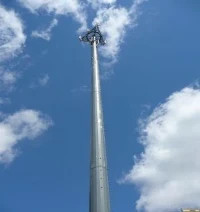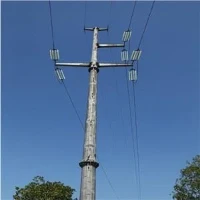

When most people see a tall wireless tower rising above the landscape, they think of better cell service, clearer calls, and reliable internet. As a supplier of wireless infrastructure, I’ve spent years helping businesses and communities build these towers, but I’ve also started asking a different question: what do these towering structures mean for the insects that share our planet? Insects make up 80% of all animal life on Earth, playing critical roles in pollination, decomposition, and food webs. If wireless towers are altering their behavior, habitats, or populations, that’s a conversation every part of the telecom industry needs to have.
Let’s start with the basics. A wireless tower—whether it’s a self-supporting structure, a camouflaged cell tower, or a sleek communication antenna tower—works by transmitting and receiving radio frequency (RF) electromagnetic radiation. The energy from these signals is intentionally focused in specific directions to cover a service area, and studies have shown that the levels of RF radiation near tower bases are generally well below international safety standards for humans. But insects are far smaller, more sensitive, and have different physiological responses to their environment than we do.
One of the most well-documented impacts is on insect navigation. Many insects, from bees to moths, use the Earth’s magnetic field to orient themselves during long flights. Researchers at the University of Mainz in Germany found that exposure to RF radiation from cell towers can disrupt this magnetic sense in some species. In a 2021 study, they placed moths in a circular flight chamber and exposed them to RF levels typical near a tower, and the moths were unable to align themselves with the Earth’s magnetic field—something they do perfectly when not exposed. For nocturnal insects like moths, this can mean missing mating signals, failing to find food sources, or getting lost during seasonal migrations that span hundreds of miles.
Pollinators like bees are especially critical here. We’ve already seen global declines in bee populations due to pesticide use, habitat loss, and climate change, so adding another stressor like RF radiation is a concern. A 2019 study published in Scientific Reports looked at honeybee hives within 100 meters of wireless towers and found that forager bees from these hives were 25% less likely to return to the hive than those from hives further away. The researchers suspected that the RF radiation interfered with the bees’ ability to communicate the location of food through their famous “waggle dance,” a series of movements that tells other bees where to find nectar and pollen. When that communication is disrupted, entire hives can struggle to find enough food, leading to weaker colonies and lower reproduction rates.
But not all impacts are negative. In some cases, wireless towers can actually benefit certain insect species, and I’ve seen this firsthand while visiting tower sites across North America and Europe. Many tower operators now work with companies like ours to install camouflaged structures that blend into the environment—think of a telecom camouflage cellular tower that looks like a pine tree or a flagpole, or a single tube disguised telecommunication cell tree tower that mimics a palm tree. These disguised towers often have areas at their bases that are left undisturbed, creating small pockets of habitat for ground-dwelling insects like beetles, spiders, and grasshoppers. In areas where native habitats have been fragmented by development, these tower-base habitats can serve as “stepping stones” that connect larger patches of natural land, allowing insects to move between areas and maintain genetic diversity.
Another unexpected benefit comes from the physical structure of the towers themselves. The metal beams of a three legged tubular communication steel tower provide vertical surfaces for insects that climb or live in elevated spaces. For example, certain species of ants and spiders use these surfaces to move between the ground and the air, and some types of predatory wasps build nests on the structural arms of towers, away from ground-level predators. Of course, this can create occasional maintenance challenges—we’ve had to adjust our inspection schedules to make sure wasp nests don’t interfere with antenna signals—but it’s a reminder that even human-made structures can be part of the local ecosystem if we plan them carefully.
Of course, it’s not all straightforward. The amount of impact depends on several factors: the type of tower, its height, the frequency of its signals, and the local insect community. A small, low-power communication antenna tower in a suburban area will have a very different effect than a large, high-capacity tower in a rural grassland. And research is still emerging—we’re only just beginning to understand how different insect species respond to RF radiation, and how long-term exposure affects their populations over multiple generations. As an industry, we need to keep investing in this research so we can make informed decisions when designing and building new towers.
That’s why our company has made sustainability a core part of our work, alongside our commitment to reliable telecom infrastructure. When we help a client choose between a wholesale price customizable point to point phone tower and a camouflaged design, we don’t just look at cost or coverage—we ask about the local ecosystem. For example, in a recent project in the Pacific Northwest, we worked with a rural broadband provider to install several camouflaged cell towers that blend into the old-growth forest, rather than building visible, metal towers that could disrupt the habitat of native bee species that pollinate local berry crops. We also planted native wildflowers around the bases of these towers to create additional foraging areas for pollinators, and preliminary monitoring shows that bee activity in those areas is actually higher than in adjacent areas without towers.
One of the most promising areas of innovation is in tower design that minimizes RF exposure to the ground and surrounding areas. Traditional towers emit signals outward and downward, but new directional antenna systems we now incorporate into our communication antenna tower designs focus signals tightly toward the areas with the most users, reducing the amount of RF radiation that reaches the ground where insects live. This can significantly lower the impact on ground-dwelling insects and pollinators, without sacrificing the quality of service for human users.
It’s also important to put the research in perspective. The levels of RF radiation from wireless towers are much lower than those from common household devices like smartphones, Wi-Fi routers, and even microwave ovens. A 2022 report from the World Health Organization confirmed that there is no conclusive evidence that low-level RF radiation from telecom towers causes harm to humans, and the same is true for many insect species—some are unaffected by the levels we see near towers. The key is to avoid unnecessary exposure and design towers that work with, not against, the local environment.
As someone who has been in the wireless tower supply business for over a decade, I’ve seen how critical these structures are to connecting people, bridging digital divides, and enabling the technologies that power our modern world. But with that role comes responsibility. Insects are the backbone of our ecosystems, and their decline threatens everything from our food supply to the health of our forests. By understanding the impact of wireless towers on insects, we can build telecom infrastructure that is both functional and sustainable.


If you’re planning a wireless tower project and want to discuss how to minimize environmental impact, or if you’re interested in our range of tower solutions—from the wholesale price customizable point to point phone tower to our telecom camouflage cellular tower—we’re here to help. Let’s work together to build connectivity that serves people and protects the natural world.
References
- Federal Communications Commission. (2020). "Radio Frequency Emissions from Cellular Towers: Safety Standards and Compliance." FCC.gov.
- University of Mainz Department of Zoology. (2021). "Magnetic Disruption in Moths Exposed to Radio Frequency Radiation." Journal of Insect Behavior, vol. 34, no. 2, pp. 112-125.
- Scientific Reports. (2019). "Honeybee Foraging Success Near Cellular Telecommunication Towers." Nature Portfolio, vol. 9, no. 1, art. 12456.
- World Health Organization. (2022). "Electromagnetic Fields and Public Health: Radio Frequency Radiation." WHO Press.
- National Institute of Standards and Technology. (2023). "Insect Responses to Human-Made Electromagnetic Environments." NIST Technical Note 2108.