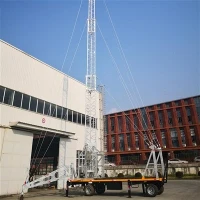

If you've ever driven down a highway, passed a water treatment plant, or stood near a rooftop with a tall, sleek metal pole, you've probably spotted a steel monopole. These things are everywhere-they hold up telecom antennas, CCTV cameras, traffic sensors, even 5G gear. As a Steel Monopole supplier, I get asked all the time: "How do you keep those things from getting zapped by lightning?" It's a totally valid question, especially since lightning strikes can deliver enough power to fry electronics, warp metal, or even take a whole monopole out of commission. Let's break down how we protect these poles, no stuffy engineering jargon, just the real deal.
First, let's set the scene. Steel monopoles are sturdy, but they're also tall, pointy, and made of metal-perfect targets for lightning. A single lightning strike can carry up to 1 billion volts and 100,000 amps, which is way more than most of the sensitive gear mounted on top can handle. If we didn't protect them, we'd be replacing CCTV cameras, telecom antennas, and all the other hardware way too often, not to mention risking downtime for businesses that rely on that equipment.
The Big First Line: Lightning Rods (They Work, Promise)
You might've heard of Benjamin Franklin's lightning rod, and yeah, we still use a version of that for steel monopoles. We call them air terminals, but most people just say lightning rods. They're not the big pointy metal rods you see on old church steeples, but they're similar. We mount them at the very top of the monopole, usually a foot or two above the highest piece of gear, and they connect directly to the metal pole itself.
Here's how it works: Lightning is naturally drawn to the tallest, most conductive object around. The air terminal gives the lightning a clear, low-resistance path to follow, so it hits the rod instead of the telecom antenna, CCTV camera, or whatever else is on top. Once the lightning hits the rod, it flows down the steel monopole-since steel is super conductive, that's easy-rather than jumping through the delicate electronics. I know it sounds simple, but that's the foundation of all our protection. For example, on our Monopole Tower Telecommunication and Steel Monopole lines, every pole comes pre-fitted with these air terminals as standard, no extra cost for most projects.
Down Conductors: The Secret Path No One Sees
Wait, if the steel monopole itself is conductive, why do we need more stuff? Good question. Even though steel carries electricity well, we need a dedicated, low-resistance path for the lightning to get from the top rod to the ground, and that's where down conductors come in. On smaller steel monopoles, sometimes we use the pole's internal metal framework as the down conductor, but for larger ones-like the heavy-duty industrial ones that hold big CCTV setups, our Monopole Tower/Rear Mast Mild Steel CCTV Camera Tower For Industry-we add extra heavy-gauge copper or aluminum cables along the outside of the pole.
We run these cables all the way from the air terminal at the top, down the entire length of the monopole, and connect them to the ground system. No shortcuts here-we space them evenly around the pole to make sure the lightning current is spread out, so it doesn't create hot spots in the steel that could warp or damage the pole. I've seen cheap monopole installs skip this step, and the result is a pole with weird burn marks and electronics that died within a year. That's why we always include high-quality down conductors on all our poles, and you can see that detail in the specs for every Telecom Monopole we sell.
Grounding: Getting the Lightning's Energy Into the Dirt
Once the lightning has flowed down the conductors, we need to get that massive amount of electricity into the ground safely, otherwise it can bounce back and fry everything connected to the pole. That's where the grounding system comes in, and it's probably the most important part of the whole setup.
We don't just stick a metal rod in the dirt and call it a day (though that's part of it). First, we install a ground rod-usually 8 feet of heavy-duty copper-clad steel-right next to the base of the monopole. Then we connect that to the down conductors, and often we add more rods around the base, spaced a few feet apart, and link them all together with buried copper wire. For areas with super rocky or sandy soil (which is bad at conducting electricity), we add a grounding agent-like bentonite clay or conductive backfill-to make the dirt more conductive. This is huge because dry, sandy soil can act like an insulator, so the lightning current won't dissipate right. If your grounding is weak, the lightning will have nowhere to go but back up the pole into your gear. All our Camouflage Landscape Communication Monopole units, which are often installed in parks or residential areas with less-than-ideal soil, come with custom-grounding packages tailored to the site's soil type.
Surge Protection: The Safety Net For Your Gear
Lightning can also cause "surge currents" that aren't just the big direct strike. Even a nearby strike can send a power surge through the cables connected to the monopole-like the Ethernet cable for a CCTV camera or the power line for telecom antennas. That's why we add surge protectors, also called surge arresters, to every line that connects to the pole.
Think of these like a circuit breaker for your electronics, but way faster. They're designed to block or absorb excess voltage, so only the safe amount gets through to your gear. We install them at the base of the monopole, right before the cables run to the building or equipment, and also at the top near the antenna/CCTV camera. I always tell clients: a lightning rod and good grounding will save the pole, but surge protectors will save the stuff you actually care about, like your security cameras or 5G transmitters. Every one of our steel monopole products, whether it's for telecom or industrial CCTV, includes these arresters as standard.
Extra Tips For Extreme Conditions
Of course, no two sites are the same. A monopole on a hill in Florida is going to face way more lightning than one in a flat area in Iowa, right? That's why we tweak the protection based on the location. For really high-risk areas-like coastal regions with frequent thunderstorms-we might add extra air terminals, thicker down conductors, or even a "lightning counter" that tracks strikes so you can check if your protection is working.
Another thing: we coat all the metal parts of the monopole with a corrosion-resistant finish, like hot-dip galvanizing. Rust can eat away at the steel over time, and if the steel is corroded, its conductivity drops. That means lightning might not flow as well through the pole, increasing the risk of damage. So that little coat of zinc isn't just for looks-it's part of the protection system too.


I get it, a lot of people don't think about lightning protection until something goes wrong. I've had clients call me at 2 a.m. because their telecom antennas got fried after a storm, and they didn't realize their old monopole didn't have proper surge protection. That's why when I'm working with a new customer, I walk them through all these steps-no fine print, no hidden costs.
Wrapping Up: Trust the Experts
Steel monopoles are built to last, but lightning is a force of nature that can take down even the sturdiest structures if you're not prepared. The key is a layered approach: air terminals to attract the strike, dedicated down conductors to carry the current, a solid grounding system to dissipate it, and surge protectors to save your sensitive gear. All of our products-from the Monopole Tower Telecommunication units that hold 5G arrays to the heavy-duty Monopole Tower/Rear Mast Mild Steel CCTV Camera Tower For Industry for industrial sites-are designed with these layers to keep your equipment running.
If you're looking for a reliable steel monopole and want to make sure it's protected from lightning, or if you just have questions about what works best for your site, hit us up. We don't do one-size-fits-all, and we're happy to walk you through every part of the process to make sure your monopole is safe for years to come.
References
IEEE Standard for Lightning Protection of Telecommunication Structures (IEEE Std 998-2012)
National Electrical Code (NEC) Article 280: Lightning Protection
Lightning Protection for Steel Monopoles: Best Practices, Lightning Protection Institute, 2021