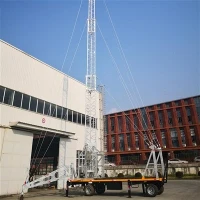

If you've ever driven past a cell tower tucked into a residential neighborhood or a park, odds are you didn't notice it at first glance. That's intentional-telecom infrastructure has to balance functionality with aesthetics, and telecom shelters are the workhorses that make that happen. For anyone looking to deploy reliable connectivity, whether for a rural 5G rollout, a city expansion, or a remote mining site, one of the first questions is always: "What is the cost of a telecom shelter?" As a telecom shelter supplier who's worked with operators, contractors, and infrastructure teams across North America, I can tell you there's no one-size-fits-all answer-but there is a way to break down the costs that matter most, and what you get when you invest in quality.
The Core Factors That Drive Telecom Shelter Costs
Let's start with the basics: a telecom shelter isn't just a metal box. It's a climate-controlled, secure enclosure that houses critical gear like radio units, batteries, and transmission equipment. The cost depends on four key pillars: size, material, customization, and site-specific requirements.
Size is the first big variable. A small, compact shelter for a single cell site might measure just 8 feet by 10 feet, perfect for tight urban lots or remote areas where space is limited. These basic units, built for standard equipment storage, typically start around $12,000 to $18,000. But if you need to house multiple radio units, backup batteries, and power management systems, you'll jump to a 12-foot by 20-foot model, which runs between $22,000 and $32,000. For larger deployments with high-capacity 5G gear, some clients go even bigger-up to 20 feet by 40 feet-with price tags from $40,000 to $60,000.
Material and construction quality are non-negotiable for durability, and they directly impact cost. The most common materials are galvanized steel, aluminum, and composite panels. Galvanized steel is the gold standard for harsh environments because it resists rust and corrosion, making it ideal for coastal areas or regions with extreme temperatures. A steel shelter will cost more upfront-usually 15-20% more than an aluminum model-but it's built to last 25+ years, whereas aluminum might need replacement in 15-20 years. Composite panels, which are lightweight and low-maintenance, are growing in popularity for urban sites, though they tend to be pricier for larger units.
Customization is where costs can shift the most. Off-the-shelf shelters are great for fast deployments, but many clients need solutions that fit their specific needs. For example, if you're placing a shelter in a historic district or a park, a plain metal box might not pass local zoning rules. That's where camouflaged options come in. Palm trees are one of the most popular camouflage solutions for telecom towers and shelters in warm, sunny regions like Florida, California, and Texas. Our Palm Leaf For Camouflaged Telecom Towers line is designed to look like a cluster of natural palm trees, blending seamlessly into the landscape while hiding the shelter's equipment and the tower's structure. Adding this kind of camouflage can tack on $5,000 to $15,000 to the base cost, depending on the size of the shelter and the complexity of the installation.
Other common customizations include climate control systems (critical for extreme cold or heat-adding a robust HVAC unit can cost $3,000 to $7,000), reinforced security features like alarm systems and bulletproof panels (another $2,000 to $5,000), and integration with backup power sources like solar or generators. For clients deploying telecom towers, we also offer purpose-built shelters that attach directly to tower bases, like our Telecom Pine Steel Single Tower series, which is engineered to work in tandem with tower structures for remote sites without access to grid power.
Site-specific requirements are the final piece of the cost puzzle. If your site is in a remote location with limited road access, you'll pay more for transportation and installation-sometimes 20-30% of the shelter's base cost. Urban sites require foundation work that meets zoning and building codes, which can add $10,000 to $25,000 depending on soil conditions and local regulations. Even something as simple as electrical hookups or permits can vary widely: in dense cities, permits might run $5,000, while rural permits could be under $1,000.


The Hidden Costs People Often Overlook
When clients first ask about telecom shelter costs, they tend to focus only on the price of the unit itself. But there are hidden costs that can add up quickly, and skimping on these often leads to bigger problems down the line.
Maintenance is a big one. A cheap, poorly built shelter might have loose seams that let in water, or HVAC units that fail in the middle of summer, costing you thousands in equipment damage. A quality galvanized steel shelter, on the other hand, requires almost no annual maintenance-just a quick inspection once a year. We include a 5-year warranty on all our standard Standard Telecom Equipment Shelter units, and our camouflaged models come with weather-resistant palm leaves that don't need replacement for a decade.
Security is another hidden cost. Telecom shelters are prime targets for theft of copper wiring and battery components. A shelter without proper locks or alarm systems could result in tens of thousands in downtime and stolen gear. Investing in basic security features upfront is far cheaper than dealing with a breach, which can take sites offline for days or weeks.
Future scalability is also important. If you buy a small shelter now to save money, but you plan to add 5G equipment in two years, you'll have to replace the entire unit or pay to expand it. It's often more cost-effective in the long run to invest in a slightly larger, pre-wired shelter that can handle future upgrades, rather than doing double the work.
Real-World Examples to Put It All Together
Let's ground this in a couple of real projects I've worked on recently. Last year, a municipal client in Miami needed to deploy 10 small cell sites in residential areas. They chose our 8'x10' standard steel shelters, paired with our palm leaf camouflage to meet local zoning rules. The base cost per shelter was $14,000, plus $7,000 for camouflage, $3,000 for a basic HVAC unit, and $5,000 for foundation and installation in urban soil. Total per-site cost came to $29,000, and they were able to deploy all 10 sites in 8 weeks, with zero zoning pushback because the shelters looked like natural palm trees.
Another client, a mining company in northern Canada, needed a robust shelter to house equipment for a remote site with temperatures dropping to -40°F. They went with a 12'x20' galvanized steel shelter, with reinforced insulation, a high-capacity HVAC system, and integration with a solar backup power system. Base shelter cost was $28,000, plus $4,500 for insulation and HVAC, $6,000 for solar integration, and $12,000 for transportation and installation to the remote site. Total cost was $50,500 per unit, and it's performing perfectly in extreme cold with minimal maintenance.
Is Cheaper Always Better?
I get it-budgets are tight, and it's tempting to go with the lowest bid. But in the telecom industry, reliability is non-negotiable. A cheap shelter that fails will cost you far more in downtime, repairs, and lost connectivity than the premium option. For example, a client who tried a $8,000 off-the-shelf aluminum shelter for a remote site in Arizona found that the metal warped in extreme heat, leading to HVAC failure and $20,000 in damaged equipment within a year. They ended up replacing it with our $25,000 galvanized steel shelter, which has lasted 3 years with no issues.
That said, cost doesn't have to mean overspending. Many operators can work with our team to customize a shelter that fits their exact needs and budget-whether that's a compact unit for a small urban site or a solar-powered option for a remote location. We also offer flexible financing options for large deployments, so you don't have to pay upfront for all your units at once.
Let's Talk About Your Telecom Shelter Needs
Whether you're rolling out 5G, expanding rural connectivity, or upgrading existing infrastructure, getting the right telecom shelter is key to long-term success. The cost depends on your specific site, gear, and goals, but the most important thing is to work with a supplier who understands both the technical needs of telecom infrastructure and the practical challenges of deployment.
If you're ready to discuss your project, we can help you break down costs, compare different options, and find a solution that fits your budget without sacrificing quality. Whether you're interested in our standard shelters, camouflaged options, or specialized tower-integrated units like the Telecom Pine Steel Single Tower, our team has the expertise to guide you every step of the way.
References
- Telecommunications Industry Association. (2022). Telecommunications Shelter Standards: Thermal Management and Structural Requirements. TIA-222-G.
- National Telecommunications and Information Administration. (2023). Rural Broadband Deployment: Site Infrastructure Cost Analysis. U.S. Department of Commerce.
- Cellular Telecommunications & Internet Association. (2021). Zoning Best Practices for Telecom Infrastructure. CTIA Industry Report.