
Establishing a Wi-Fi tower for public use is a complex yet rewarding endeavor that can significantly enhance connectivity in communities. As a seasoned Wi-Fi tower supplier, I've witnessed firsthand the transformative power of well - designed and properly installed Wi - Fi towers. In this blog, I'll guide you through the process of setting up a Wi - Fi tower for public use, from initial planning to the final installation.
1. Initial Planning
The first step in setting up a Wi - Fi tower for public use is to conduct a comprehensive feasibility study. This involves assessing the geographical area where the tower will be installed. Consider factors such as population density, existing Wi - Fi coverage, and the terrain. Areas with high population density, such as city centers or large residential complexes, are ideal candidates as they have a greater demand for public Wi - Fi.
Next, you need to define the scope of your project. Determine the coverage area you aim to provide Wi - Fi for. This could be a small park, a large shopping mall, or an entire neighborhood. The size of the coverage area will influence the type and number of equipment you'll need.
It's also crucial to understand the regulatory requirements. Different regions have different rules and regulations regarding the installation of Wi - Fi towers. You may need to obtain permits from local government authorities, comply with environmental regulations, and adhere to safety standards. Failure to comply with these regulations can lead to fines and delays in your project.
2. Selecting the Right Tower
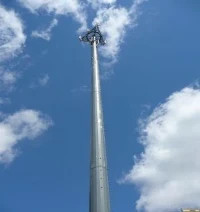
The choice of tower is a critical decision in the setup process. There are various types of towers available, but for public Wi - Fi, monopole towers are often a popular choice. Monopole towers are single - pole structures that offer several advantages. They are relatively easy to install, require less space compared to other tower types, and have an aesthetically pleasing appearance, making them suitable for urban and suburban areas.
As a Wi - Fi tower supplier, I recommend considering Telecommunication Steel Monopole Tower. These towers are made of high - quality steel, which provides excellent strength and durability. They can withstand harsh weather conditions, ensuring long - term reliability of your Wi - Fi network.
Another option is the Monopole Telecommunications Tower. These towers are specifically designed for telecommunications applications, including Wi - Fi. They come with features such as easy access for maintenance and the ability to support multiple antennas, which is essential for providing wide - area coverage.
If you're looking for a tower with enhanced corrosion resistance, the Hot Dip Galvanized Monopole Tower is a great choice. The hot - dip galvanizing process coats the tower with a layer of zinc, protecting it from rust and corrosion, even in coastal or industrial areas.
3. Equipment Selection
Once you've selected the tower, you need to choose the appropriate Wi - Fi equipment. This includes access points, routers, and antennas. The number and type of access points will depend on the coverage area and the expected number of users. For large areas, you may need multiple access points to ensure seamless coverage.
When selecting routers, look for models that offer high - speed data transfer, reliable performance, and advanced security features. Antennas are also crucial as they determine the range and strength of the Wi - Fi signal. Directional antennas are suitable for providing focused coverage in a specific area, while omnidirectional antennas can provide 360 - degree coverage.
4. Site Preparation
Before installing the tower, the site needs to be properly prepared. This includes clearing the area of any obstacles, such as trees or debris, and ensuring that the ground is level and stable. If the tower is to be installed in a built - up area, you may need to coordinate with local authorities to ensure that there are no underground utilities or other infrastructure that could be damaged during the installation process.


A concrete foundation is typically required for the tower. The size and depth of the foundation will depend on the height and weight of the tower. A professional engineer should be involved in the design and construction of the foundation to ensure its stability.
5. Tower Installation
Tower installation should be carried out by experienced professionals. The installation process involves lifting the tower into place and securing it to the foundation. Once the tower is in place, the Wi - Fi equipment is installed on the tower. This includes mounting the antennas at the appropriate height and angle to achieve the desired coverage.
During the installation, it's important to follow all safety protocols. Workers should wear appropriate safety gear, and the installation site should be properly secured to prevent unauthorized access.
6. Network Configuration
After the tower and equipment are installed, the next step is to configure the Wi - Fi network. This involves setting up the access points, routers, and other network devices. You need to define the network name (SSID), set a strong password, and configure the security settings to protect the network from unauthorized access.
It's also important to optimize the network settings for performance. This may include adjusting the channel width, signal strength, and other parameters to ensure that the Wi - Fi network provides fast and reliable connectivity.
7. Testing and Maintenance
Once the network is configured, it's essential to conduct thorough testing. This includes checking the signal strength and coverage area, testing the data transfer speed, and ensuring that multiple devices can connect to the network simultaneously without any issues.
Regular maintenance is also crucial to keep the Wi - Fi tower and network in good working condition. This includes inspecting the tower for any signs of damage, checking the equipment for proper functioning, and updating the software on a regular basis.
8. Cost - Benefit Analysis
Setting up a Wi - Fi tower for public use involves significant costs, including the cost of the tower, equipment, installation, and maintenance. However, there are also many benefits. Public Wi - Fi can attract more visitors to an area, enhance the quality of life for residents, and promote economic development.
Before starting the project, conduct a detailed cost - benefit analysis to determine whether the project is financially viable. Consider factors such as the potential revenue from advertising on the Wi - Fi network, the cost savings for local businesses, and the social benefits of providing free public Wi - Fi.
In conclusion, setting up a Wi - Fi tower for public use requires careful planning, the right equipment, and professional installation. As a Wi - Fi tower supplier, I'm here to help you every step of the way. Whether you need advice on tower selection, equipment installation, or network configuration, I have the expertise and experience to ensure the success of your project. If you're interested in purchasing a Wi - Fi tower or have any questions about setting up a public Wi - Fi network, feel free to reach out and start a procurement discussion.
References
- Telecommunications Engineering Handbook.
- Wi - Fi Network Design and Implementation Guide.
- Local government regulations on tower installation and Wi - Fi network operation.