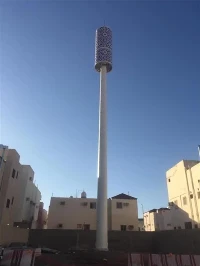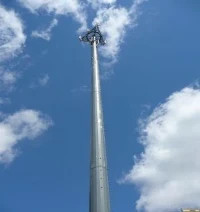

If you’ve ever driven through a remote area and spotted a tall, smooth, single tube structure standing in an open field, you might’ve assumed it was a cell tower. But lately, I’ve gotten a ton of questions from folks in meteorology circles: can these steel monopoles actually work for weather equipment too? As a supplier of steel monopoles, I’m here to break that down without all the stuffy jargon—because the short answer is yes, and there are actually a bunch of really smart reasons it makes sense for both industries to overlap here.
First, let’s start with the basics. A steel monopole is basically a single, vertical steel tube—no trusses, no legs, just a sleek, sturdy pole. For my company, we make a range of these for different uses: from the slim, cell phone-friendly Monopole Telecommunication GSM Antenna Cell Phone Pole Mobile Tower you’ll find on our wireless tower page, to bigger, reinforced ones for power transmission like the Hot DIP Galvanized Steel Monopole Electric Power Transmission Tower. The cool thing about monopoles vs. other structures (like lattice towers or guyed masts) is their simplicity—they’re easy to install, take up less ground space, and look way less obtrusive, which is a big deal for both cell providers and weather teams that don’t want their gear sticking out like a sore thumb in a national park or suburban neighborhood.
Now, why would meteorology teams care about a steel monopole? Traditional weather stations usually have sensor masts, often made of aluminum or wood, that are short—like 10 to 20 feet tall. But for accurate weather data, especially for wind speed, direction, turbulence, or even upper-air measurements, you need sensors mounted higher up, away from ground-level noise. Ground obstacles like trees, buildings, or even uneven terrain can mess with wind readings, so a tall, unobstructed pole that sticks above those barriers is perfect. A steel monopole can go way higher than your average sensor mast—some of our Telecom Monopole Towers hit 100, 150, even 200 feet tall, which is exactly what you need for those unobstructed readings.
Wait, but hold on—does steel hold up to the weather? That’s the big worry, right? You’re talking about a pole sitting outside, sometimes in coastal areas with salt spray, or the Midwest with tornado winds, or the Northeast with heavy snow and ice. The good news is that our standard monopoles are hot-dip galvanized, which is the gold standard for corrosion protection. That same coating we use for power transmission towers is applied to all our monopoles, so they don’t rust easily. We’ve had some in coastal Florida now for 12 years and they still look like new. And structurally, steel is super strong—steel monopoles can withstand wind speeds up to 150 mph, which is more than enough for most weather regions, even hurricane zones. For places with really extreme wind, we can tweak the design a bit, make the tube thicker, or add extra bracing (though most monopoles don’t need that—they’re already engineered for heavy loads).
Another win: multipurpose use. A lot of rural areas, especially, don’t have a lot of tall structures. So why build two separate poles—one for cell service and one for weather monitoring—when you can combine them? That’s a conversation I’ve had with a few local weather departments lately. You mount your weather sensors (anemometers, wind vanes, temperature sensors, maybe even rain gauges or air quality monitors) on one arm of the monopole, and cell antennas on another, and boom—you’re using one pole instead of two. That cuts down on land costs, installation time, and even maintenance. For example, our Single Tube Landscape Cell Monopole Tower is designed to look like a lamppost, so if you’re setting this up in a small town or near a school, it doesn’t look out of place—you’d never guess it’s holding both cell gear and weather tools.
But is there a downside? Let’s be real, nothing’s perfect. Monopoles are a single tube, so they don’t have the same stability as a 3 Legged Triangle Free Standing Telecommunication Tower for super heavy loads. If you’re trying to mount a ton of big weather gear—like a large upper-air sounding device or a radar antenna—a monopole might not be enough, but most standard weather sensors are pretty lightweight. The average anemometer is only a few pounds, so even a smaller monopole can handle that. Another thing: installation. Monopoles are usually transported in sections, so you need a crane to put them up, which is doable, but maybe a bit more work than a small wooden mast. But for tall installations, you can’t really avoid a crane anyway.
I also want to talk about why this isn’t just a random trend—meteorology is changing. We need more accurate, high-resolution weather data, especially as extreme weather events get more common. Old weather stations are often spaced far apart, so if a storm is moving, you might not get real-time data from the exact spot you need. Setting up small, multipurpose monopoles in remote areas means more sensors closer together, which leads to better forecasting, better warnings, and even better research for climate science. For example, a new station in the Rockies might use a monopole with both cell service (so the data can be transmitted instantly) and weather sensors, giving forecasters a better look at mountain wind patterns that can affect storm formation.
Now, as someone who sells these monopoles, I’ve worked with a bunch of different teams—cell providers, energy companies, and lately, a few state weather services. Here’s what I’ve learned: the key is to talk about your exact needs early on. If you’re a meteorology team looking at a monopole, don’t just buy the cheapest one from a catalog. Think about how tall you need to be, what kind of sensors you’re mounting, what climate you’re in (coastal? snowy? windy?), and if you want to combine it with other gear like cell service. We can customize almost every part: the height, the diameter of the tube, the type of galvanizing, even the color, so it blends in with the landscape if you don’t want it to stand out.
Wait, let’s clear up a common misconception: some people think steel monopoles are too expensive for weather stations. But when you factor in the cost of building a separate sensor mast, a separate foundation, separate installation, and separate maintenance, the monopole actually ends up being a better deal. And if you add cell service (which a lot of weather stations need to transmit data), you’re getting two uses for one cost. That’s a big selling point for cash-strapped local weather departments, which is a lot of what we deal with these days.
I also talked to a friend who works for the National Weather Service a few months back, and he mentioned that they’ve been testing monopole-mounted weather sensors in the Great Plains. They’ve been using telecom monopoles that we supply, and the wind data they’re getting is way more accurate than from old, short masts because they’re mounted higher, away from ground-level turbulence. The only tweak they made was adding a little extra weight to the base for super high winds, which is an easy adjustment to the monopole’s design.


So let’s wrap this up. Steel monopoles aren’t just for cell phones anymore—they’re totally viable for meteorological equipment. They’re strong, corrosion-resistant, easy to customize, and can even save money if you combine them with other uses. The biggest thing is finding a supplier who knows both industries, not just one. We’ve been making monopoles for years, and we’ve got the experience to work with weather teams to build something that fits their exact needs, not a one-size-fits-all pole.
If you’re a meteorologist looking to set up a new station, or someone who wants to learn more about adapting monopoles for weather use, don’t hesitate to reach out. We can walk you through different options, from smaller poles for local stations to taller ones for remote areas, and help you figure out what works best for your location and budget.
References
- Federal Communications Commission. (2022). Monopole Tower Design and Installation Standards.
- American Meteorological Society. (2021). Best Practices for Mounting Weather Sensors on Tall Structures.
- International Code Council. (2020). Structural Requirements for Steel Transmission and Communication Towers.
- National Weather Service. (2023). Remote Weather Monitoring: Combining Telecom Infrastructure with Sensor Arrays.