

What affects the range of cell towers?
The range of cell towers is not a fixed number. That's because there are so many variables when it comes to the range of cell towers to connect mobile devices. The most common variables include:
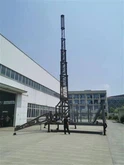
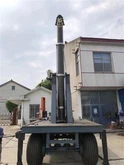
The height of the antenna above the surrounding landscape.
The signal frequency used.
The rated power of the transmitter.
Directional properties of field antenna arrays.
Nearby buildings and vegetation absorb and reflect radio energy.
Local geographic or regulatory factors and weather conditions.
Cell phone towers are often built in areas of high population density. That's because these cities have the largest number of potential cell phone users. For this reason, you'll often find cell towers "overlapping" in more congested areas. This helps avoid interference issues.
If you find yourself wondering why your phone doesn't have a signal, it could be because you're too far from a tower, or your phone signal is weakened by a hill, large building, or other structure. You can also lose signal if a lot of people try to use cell towers at the same time. This usually results in a dropped call.
While driving, your phone can switch from one cell tower to the next in the middle of a call. As you continue your journey, the phone will select the strongest signal and release weaker cell towers, making them available to other callers.
Another factor that can affect signal is problems with cell towers. With the help of a surveyor like Millman National Land Service, these issues can be identified so they don't become major headaches.