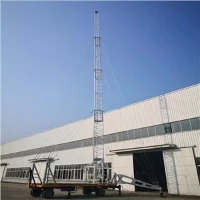


How do cell towers work?
More than 300 million cell phones are in use in the United States every day. Whenever a cell phone is used, it emits electromagnetic radio waves, called radio frequencies, which are picked up by the antenna of the nearest cell tower.
Once the cell tower receives that signal, it transmits the signal to a switching center. This allows the call to be connected to another mobile phone or the telephone network. It's crazy to think that all of this happened in just a few seconds.
part of a cell phone tower
Cell phone towers owe their ultra-fast technology to their components. You'll hear us mention cell phone carriers several times in this section. That's because many parts of cell towers are provided by individual cellular operators, also known as wireless networks.
There are four wireless networks with the best coverage in the United States. The biggest provider right now is Verizon, which has 70% 4G coverage. AT&T was a close second with 68 percent. T-Mobile has 62%, and Spring is fourth at 27%, a significant drop in coverage.
Verizon US 4G coverage base station in the United States
tower
There are actually four different types of cell phone towers. The first is called a lattice tower. Also known as a self-supporting tower, this type of tower is incredibly flexible. It usually has three or four sides with a similarly shaped base.
The second type of tower is the monopole tower. This type of tower has a single steel tube or concrete tube tower, usually under 50 meters. It just needs a base. The antenna is attached to the outside.
Guyed towers are cost-effective but require more land. It is usually built 100 meters or longer, with guy wires purchased to anchor and support it. They are attached to the ground in all directions. Most broadcast TV towers are guyed towers.
The fourth is the stealth tower, which we have briefly introduced before. Often required by the council, these are more expensive than the other three options, but are designed to beautify the neighborhood in which they are located. They need additional materials to help them hide in plain sight. While more attractive, they often don't offer the same amount of capacity to tenants.
equipment
The equipment on cell towers includes transceivers and other enabling technology. They are installed in a cabinet or shelter or any other way the wireless carrier chooses to secure them. Some even build outdoor cabinets on concrete pads or prefabricated equipment sheds.
antenna
Well, we've touched a lot of antennas, but what are they? There are multiple antennas attached to the cell tower, usually mounted on a headgear. Some towers even have as many as 15 antennas per carrier. This number really depends on the performance, coverage and capacity requirements of the antenna.
Utilities and Access
The carrier will also install utilities at cell tower sites. Each carrier has the right to run to-site as well as phone service. Each cell tower also requires operator visits for initial installation and ongoing maintenance.
cell tower range
The above section helps determine how far a cell tower is from your phone while still being able to receive its signal. This distance depends on the connection technology, landscape features (hills, trees, and buildings), the power of the tower transmitter, the size of the cellular network, and the design capacity of the network.
Interestingly, cell towers sometimes deliberately set their transmitter base to a lower power to ensure it doesn't interfere with neighboring cells.
But even taking all of these factors into account, a typical cell phone tower can provide service at distances of up to 45 miles. That's pretty impressive! Let's take a closer look at the various components that affect the range and effectiveness of cell towers.