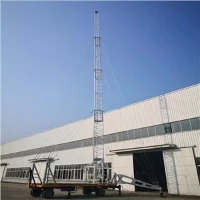


Communication towers play a crucial role in telecommunications. They are tall structures that allow various electronic devices to communicate with each other over long distances. As the world becomes more interconnected through technology, communication towers have become an essential part of modern-day communication.
What Are Communication Towers?
Communication towers, also known as cell towers or mobile masts, are tall structures that consist of antennas and other electronic equipment. Their primary purpose is to facilitate wireless communication across long distances. Cell towers are common in areas where natural terrain or buildings obstruct wireless signals.
How Do Communication Towers Work?
Communication towers work by transmitting and receiving radio frequency signals. These signals are sent and received through antennas mounted on the tower. The antennas facilitate communication between various electronic devices such as mobile phones, radios, and other wireless devices. The tower's height allows the signals to cover a larger area, which enables wireless communication over long distances.
The tower base station carries electronic equipment known as the transceiver. This equipment is responsible for converting the data from the wireless devices into radio frequency signals that can be transmitted over the airwaves. The transceiver can also receive signals sent from other transceivers over the airwaves and convert them into data that can be transmitted to the wireless devices.
The communication tower also requires power to function properly. The power supply for the tower could be from solar panels or a direct power source from the electricity grid. In addition, the tower also has a backup battery that could power the tower in case of a power outage.
Significance of Communication Towers
Communication towers are essential in the telecommunication industry. They facilitate wireless communication over long distances, making it possible for people to stay connected, regardless of their location. They also play a significant role in emergency communication, such as during natural disasters. In such cases, communication towers act as a critical communication link between people in affected areas and emergency responders.