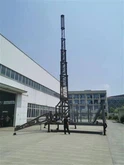


Why telecommunications towers are key to the 5G era
As we move towards a world where everything is connected all the time, the need for a robust and efficient telecommunications infrastructure is more critical than ever before. The next generation of wireless networks--5G--promises to bring faster and more reliable connectivity to homes, businesses, and individuals around the world. However, in order for this promise to become a reality, there must be a significant investment in the necessary infrastructure, including telecommunications towers.
What are telecommunications towers?
First, let's define what we mean by telecommunications towers. These are tall steel structures that are used to carry communication equipment, including antennas, cables, and transmitters. They can be freestanding or attached to buildings, and are designed to support wireless communications, such as cell phone signals, radio and television broadcasts, and internet connections. The taller the tower, the greater the range and reach of the communication signals it can transmit.
Why are telecommunications towers important?
Telecommunications towers play a crucial role in modern-day communications infrastructure. They provide the necessary infrastructure to connect mobile phone networks, Wi-Fi hotspots, and other wireless devices. They also facilitate the transmission of GPS signals, emergency services communications, and other critical communications that we have come to take for granted.
In addition to supporting these services, telecommunications towers are also vital for many industries, including transportation, agriculture, and healthcare. For example, in the transportation industry, telecommunications towers are used to transmit data between vehicles, improving safety and enabling remote monitoring of vehicle performance. In agriculture, towers are used to support precision farming, where sensors and other equipment are used to optimize crop yields and conserve resources through automated monitoring and management of crops. In healthcare, telecommunications towers are used to support remote monitoring of patients, enabling physicians to monitor vital signs and other health metrics remotely.