

Professor Zhao Yufeng, deputy director of the Indoor Environment Monitoring Working Committee of the China Interior Decoration Association, wrote in his 2005 paper "Improving the quality of the living environment and reducing the level of public electromagnetic radiation exposure": "The theory of harmful electromagnetic waves is subject to various questions, because humans cannot Explain the causes of many diseases such as leukemia. The research on electromagnetic waves is only more than 20 years. At the same time, electromagnetic waves are different from smoking, and their intensity, frequency, contact time, and waveform are more complicated, so it is difficult to prove the relationship between it and cancer. In the current medical investigation, one cannot deny that electromagnetic waves have an impact on the human body. The carcinogenic, teratogenic, and mutagenic 'triple effect' caused by radiation is being studied and discussed. "
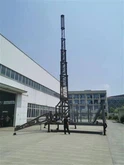
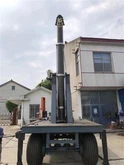
Zhao Yufeng introduced that the electromagnetic radiation emitted by communication towers mainly affects the human body through thermal effects, causing neurasthenia syndrome and autonomic dysfunction reflected in the cardiovascular system. Typical symptoms are headache, dizziness, general malaise, fatigue, weakness, insomnia, memory loss, etc. Some people experience symptoms such as salivation, chest tightness, and palpitations. Women have menstrual cycle disorders, and a few people have symptoms.
In a telephone interview with a reporter from China Youth Daily, the old expert explained: "Electromagnetic radiation emitted by communication towers is not equal to electromagnetic pollution. Exceeding a certain safety standard and reaching sufficient strength will affect some sensitive people and cause people Take precautionary measures. But do n’t be afraid to die even if you have symptoms of discomfort. You do n’t have to be irritated with electromagnetic radiation. You can recover from the symptoms of electromagnetic radiation or take some remedial measures. "
"Exceeding the standards will be harmful to the human body." Not long ago, Wang Yi, an expert on the electromagnetic radiation group of the Nuclear and Environmental Regulatory Standards Expert Committee of the Ministry of Environmental Protection explained in an interview with the media that "mobile communication base stations are within its operating frequency range The national regulation is 40 microwatts per square centimeter. If it exceeds 40 microwatts, this environment may be at risk. If it is less than this standard, there will be no problem. "
Wang Yi told the China Youth Daily that this standard was made by the electromagnetic radiation protection regulations (GB8702-88) emitted by communication towers.
Some experts said that when conducting an environmental assessment of mobile communication base stations, one-fifth of the power density in GB8702-88, that is, 8 microwatts per square centimeter, is the standard.
The expert revealed that in the 1990s, the country had organized a compilation team of more than 20 people including experts from environmental protection departments, health departments, power departments, communications departments, and radio interference experts to revise the electromagnetic radiation standards and "close to international standards." , No agreement was reached because of disagreements. "
"Now this standard should be said to be relatively strict. The international standard is 50 microwatts." Wang Yi said, "It is still a matter of quantity. Now people cannot live without electricity and electromagnetic waves. Many people I do n’t know about base stations, and I ca n’t see, touch, or smell the electromagnetic waves, so I ’m afraid. ”
In response to some residents reporting symptoms such as hair loss and insomnia due to the influence of electromagnetic radiation, the expert further explained, "Now the urban environment is more complicated and people are under greater pressure. It may also be caused by other reasons such as social reasons."
Professor Zhao Yufeng, who has participated in the environmental assessment of communication base stations for many years, said: "The vast majority of base stations are in residential areas and meet safety standards. However, some older base stations have higher power and are closer to residential areas, and are gradually being transformed." He found that In the past, many base stations built in the countryside have already been built around them. "Many problems are left over from history, and the planning department did not take care of them."
During the interview, the reporter found that the industry still has controversy over whether the electromagnetic radiation emitted by communication towers poses a threat to the human body.
One view is that electromagnetic radiation emitted by communication towers seriously affects people's health. Another point of view is that the construction of mobile base stations is in accordance with relevant national standards. The height of GSM base station antennas meets nationally prescribed safety values. In addition, the energy of electromagnetic waves in the air is attenuated, and the influence of electromagnetic radiation is actually very weak.
An industry insider who asked not to be named told the China Youth Daily: "This is an issue that is unclear. The three major operators have come forward to explain this issue, but the hotter they become, the more unclear the issue becomes. Later, everyone simply said nothing. "