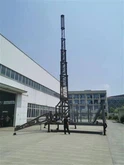


Landscape communication towers are specialized structures designed to meet the unique communication requirements of the modern age. These towers have become increasingly important in our society as they enable seamless wireless connectivity and the reliable transmission of data over longer distances.
Landscape communication towers come in various shapes and sizes, with each design tailored to suit the specific needs of their location. These structures can range from 30 meters to 100 meters in height or more, depending on the surrounding geography of the area. Landscape communication towers are found all over the world, in both urban and rural settings, and are essential for providing stable wireless communication services.
The primary function of a landscape communication tower is to ensure that signals from one communication device are transmitted to another with minimal signal loss. This function is achieved through the use of antennas, which are typically mounted on top of the tower, above the trees and buildings around it. The antennas receive and transmit signals, allowing uninterrupted communication between devices.
Landscape communication towers come in various designs, including lattice towers, monopoles, and guyed masts. Lattice towers are the most common type of tower design and are typically used in urban areas where they blend in with the surrounding environment. Monopoles feature a single pole design and are ideal for areas with high winds or harsh weather conditions. They are also preferred in areas where space is limited, such as urban environments. Guyed masts are a more traditional tower design and consist of several tall, thin poles that are braced and anchored by wires.
One of the main advantages of Landscape communication tower is their ability to provide highly reliable and uninterrupted wireless communication services. The towers are designed to withstand harsh weather conditions and natural disasters, ensuring that communication services are available even during emergencies. Additionally, these structures can be used to provide broadband internet access to remote areas, which otherwise would not have access to such critical services. The internet is an essential tool for education and communication, and Landscape communication towers are playing an increasingly important role in providing it to everyone.
LCTs are also known for their aesthetic appeal. The designers of these structures strive to create towers that blend in seamlessly with their surroundings, which helps to reduce their impact on the environment. In many cases, LCTs are designed to resemble trees, ensuring that they do not stand out in natural settings.
Landscape communication towers are essential structures that play a critical role in modern communication. They allow for uninterrupted wireless communication services in both rural and urban settings and provide access to critical communication tools such as broadband internet. Moreover, modern LCTs are designed with aesthetics in mind and blend in seamlessly with natural environments. As such, landscape communication towers remain a vital tool in ensuring that communication services continue to grow and evolve in today's fast-paced world.