

Mobile phones have become an indispensable part of our daily lives, and the key infrastructure for mobile communication is the signal tower. So, how do mobile phones use cell towers to access the Internet and make calls? This article will reveal the secret for you.
1. Basic structure and working principle of signal tower
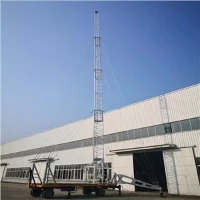
A signal tower is a tall building, usually composed of a steel frame structure, on which equipment such as antennas, feeders, and microwave antennas are installed. These devices transmit radio signals to cell phones and allow cell phones to communicate with each other.
The working principle of a signal tower can be summarized as two aspects: "broadcasting" and "receiving". In broadcasting, a tower's antenna emits radio signals around it, and these signals cover a certain area called a cell area. When a cell phone is within this area, it can receive radio signals from the tower. In terms of reception, the mobile phone will decode these radio signals into data such as sounds, images, and display them on the screen. At the same time, the mobile phone will also encode the user's voice, image and other data into radio signals and send them to the signal tower, which will then transmit them to other mobile phones or network devices.
2. The principle of mobile phones accessing the Internet through signal towers
When we use our mobile phones to access the Internet, our phones are connected to the Internet through signal towers. This process involves some key technologies, such as frequency division multiplexing (FDM), time division multiplexing (TDM) and digital signal processing (DSP).
First, the phone establishes a connection with the nearest tower via a radio signal. Cell towers then transmit the data sent by the phones to more distant base stations or network equipment, which then transmits the data over transmission lines to the Internet. Instead, when the phone receives data from the Internet, the data is transferred to the phone via the opposite path.
During the data transmission process, frequency division multiplexing technology can allocate different signals to different frequencies to avoid mutual interference; time division multiplexing technology can divide data into different time slices and transmit them one by one to avoid collisions and data loss. Digital signal processing technology can convert analog signals into digital signals and perform compression, decompression and other processing to facilitate transmission and storage.
3. The principle of making phone calls through mobile phone towers
When we make a call using a mobile phone, the mobile phone also establishes a connection with other mobile phones or network devices through the signal tower. This process involves some key technologies, such as signaling protocols and voice coding.
First, the phone establishes a connection with the nearest tower via a radio signal. The tower then converts the signaling protocol sent by the mobile phone into a format suitable for transmission and transmits it to the target mobile phone. During the call, the voice signal is converted into a digital signal, compressed and packaged using speech coding technology to facilitate transmission and storage. At the same time, the signaling protocol will also perform voice quality control and connection maintenance during the call.
In short, the principle of using a mobile phone to access the Internet and make calls through a signal tower can be summarized as follows: the mobile phone establishes a connection with the nearest signal tower through radio signals, and then realizes data transmission and voice communication through various technologies and protocols. This process involves multiple links and technologies, each with its specific role and function. It is the continuous development and innovation of these technologies that make our mobile phones more and more intelligent and convenient.