

Every time we call a mobile phone, after dialing the mobile phone number, it usually takes a few seconds to connect to another mobile phone. No matter where the other person's phone is, our phone always seems to find it accurately.
Some people may think this way: "I know that mobile phones use radio waves to communicate. My mobile phone sends a section of radio waves to the other party, and the other party's mobile phone sends back a section. Can't this complete the communication?"
"Things are not that simple. Think about it, if a mobile phone in China wants to directly send a signal to a mobile phone in the United States thousands of miles away, how much energy is needed to do it? Mobile phones can't do it because there is only a small piece of battery. Secondly, you don't know where the mobile phone you want to connect to is on the earth at the moment. You need to send signals to all mobile phones in the world to find the other party. In this way, privacy cannot be guaranteed at all.
There are billions of mobile phone users in the world. If these mobile phone users are sending signals all over the world, the radio waves will interfere with each other and the quality of your call will be greatly reduced. It's like being in a noisy room and it's hard to hear what others are saying.
Maybe some people will think this way: "My mobile phone first sends a signal to the telecommunications company, and then the telecommunications company helps me find the other party's mobile phone and quietly transmit the information to it. Other mobile phones cannot receive it." A Beijing mobile phone is different from a Beijing mobile phone. To get in touch with the Shanghai mobile phone, there are telecom operators in the two places. The Beijing mobile phone does not need to send signals to the whole world to find the Shanghai mobile phone. It only needs to send the signal to the telecom company in the city. However, there are many mobile phone users in Beijing or Shanghai, and their signals will still interfere with each other. How to solve this problem?
In fact, the radio wave frequencies used for all mobile phone communications are within a certain range. As long as we divide this frequency band into smaller frequency bands for different mobile phones, they will not interfere with each other.
This is like dividing a highway into 10 lanes and allowing only one car to drive on each lane. The frequency band assigned to each mobile phone represents the amount of data the mobile phone can send per second and every minute. However, the frequency band of mobile phone radio waves is as precious as gold. This invisible and intangible highway is actually not wide and cannot be allocated to so many mobile phones.
So people have thought of various ways to solve this problem, including various communication technologies such as 2G and 3G that people often hear about. If enough frequency bands are allocated to each mobile phone, there will be no interference between mobile phones and mobile phones. However, no matter how the limited frequency bands are divided, it is still impossible for all mobile phones in a city to use them at the same time. then what should we do?
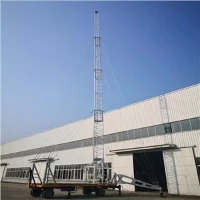
In fact, the solution is very simple. Telecommunications engineers divide a city into many small cellular areas. Each area has a mobile phone base station, which is equivalent to small offices of a telecommunications company. In each small area with a radius of several hundred meters, there are not many mobile phone users. Generally, there will be no congestion in the "wireless lanes", and mobile phone signals can pass smoothly. Although there are still other mobile phones in the same city that use the same frequency band as yours, they are in two cells that are relatively far apart and will not interfere with each other.
When a mobile phone wants to contact another mobile phone, it only needs to contact a nearby mobile phone base station. The base station will transmit the relevant information to the data center of the local telecommunications company.
There, the computer will automatically check which city the phone number you want to call belongs to, and then your information will be sent to the telecommunications company in the other city. The telecommunications company will then send the information to the base station closest to the other party's mobile phone, and then this base station Then send the information to the other party's mobile phone. It is worth mentioning that most of the communications between base stations and telecommunications companies are carried out through optical cables. That is to say, although mobile phone communications are known as wireless communications, many parts in the middle are actually wired communications.
You may also ask, there are so many cities in the world, and each city has so many base stations, how do telecommunications companies know where the other party's mobile phone is? Just like every time we go to a new place, we always tell our family that it is safe, the same is true for mobile phones. When the owner of a mobile phone takes it to a new cellular area, the first thing the mobile phone needs to do is to actively report its location to the nearest mobile phone base station, so that the telecommunications company's database will have the approximate location information of the mobile phone. If someone calls this mobile phone number, the telecommunications company can quickly trace the whereabouts of the mobile phone and connect the call within a short time.
The mobile phone base stations of various telecommunications companies form a huge network. Each of our mobile phones travels in this network and finds each other through this network.