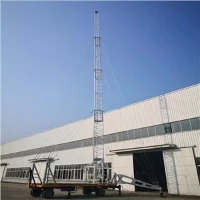


Cell towers, also known as cell sites, are essential components of modern telecommunications infrastructure. They enable wireless communication by transmitting and receiving signals from mobile devices. This article will explain how cell towers work, their components, and their role in facilitating seamless connectivity.
Components of a Cell Tower
A typical cell tower consists of several key components:
1. Antennas: These are the most visible part of a cell tower. Antennas transmit and receive radio frequency (RF) signals to and from mobile devices. Different antennas may be used for different frequency bands and technologies, such as 4G LTE or 5G NR.
2. Transceivers: Transceivers are electronic devices that both transmit and receive signals. They convert the RF signals received from the antennas into digital data that can be processed by the network, and vice versa.
3. Base Station Controller (BSC): The BSC manages the traffic between the cell tower and the core network. It controls the allocation of channels, handovers between cells, and other critical functions.
4. Power Supply: Cell towers require a reliable power supply to operate. This can come from the electrical grid, backup generators, or renewable energy sources like solar panels.
5. Cooling System: Electronic equipment generates heat, which needs to be dissipated to prevent overheating. Cooling systems ensure that the equipment operates within safe temperature ranges.
How Cell Towers Operate
The operation of a cell tower can be divided into several steps:
1. Signal Reception: When a mobile device sends a signal, it is received by the antennas on the nearest cell tower. The signal contains data such as voice, text, or internet traffic.
2. Signal Processing: The transceivers convert the RF signal into digital data. This data is then processed by the BSC, which determines the best path for the data to travel through the network.
3. Data Transmission: The processed data is transmitted from the cell tower to the core network via high-speed fiber optic cables or microwave links. From there, it can be routed to its final destination, such as another mobile device, a landline phone, or an internet server.
4. Handover: As a mobile device moves from one cell coverage area to another, the BSC coordinates a handover to ensure continuous connectivity. This involves transferring the active call or data session from one cell tower to another without interruption.
5. Signal Transmission: When data needs to be sent to a mobile device, the process works in reverse. The data is transmitted from the core network to the cell tower, converted back into an RF signal by the transceivers, and broadcasted by the antennas.
Types of Cell Towers
There are several types of cell towers, each designed to meet specific coverage and capacity requirements:
1. Macrocell Towers: These are the largest and most common type of cell tower. They provide wide-area coverage and are typically located in urban and suburban areas.
2. Microcell Towers: These smaller towers are used to fill coverage gaps or increase capacity in densely populated areas. They have a shorter range compared to macrocell towers.
3. Picocell Towers: These are even smaller and are often used indoors, such as in shopping malls or office buildings, to provide localized coverage and improve network performance.
4. Femtocell Towers: These are the smallest type of cell tower and are designed for use in homes or small businesses. They connect to the internet via broadband and provide improved indoor coverage.
Advancements in Cell Tower Technology
With the advent of 5G technology, cell towers are becoming more advanced and efficient. 5G networks require a denser deployment of cell towers due to the higher frequencies used, which have a shorter range. This has led to the development of small cells and massive MIMO (Multiple Input Multiple Output) antennas, which can significantly increase network capacity and performance.
In addition, the integration of AI and machine learning algorithms is helping to optimize network operations, predict maintenance needs, and improve overall service quality.
Conclusion
Cell towers play a crucial role in enabling wireless communication. By understanding how they work and the various components involved, we can appreciate the complexity and sophistication of modern telecommunications networks. As technology continues to evolve, cell towers will become even more integral to our daily lives, providing faster and more reliable connectivity.
Dec 09, 2024
How Cell Towers Work
Send Inquiry
Product Categories
Latest Products