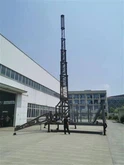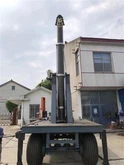


1. Anti-rust and anti-corrosion methods
All component materials of the steel tower structure (except the anchor bolts) need to be treated with anti-rust treatment. Generally, the hot-dip galvanizing method should be used, and the anti-corrosion ability of 30 years is required.
2. Requirements for the thickness of the anti-rust and anti-corrosion layer The thickness of the galvanized layer of the component should meet the following requirements:
(1) For components whose thickness is greater than or equal to 5mm, the thickness of the galvanized layer must not be less than 86μm;
(2) For components with a thickness of less than 5mm, the thickness of the galvanized layer must not be less than 65μm.
3. Other requirements
The surface of the galvanized layer of the components should be practically smooth, and no burrs, nodules, and redundant agglomerations are allowed at the joints, and there must be no defects such as pickling and exposed iron. The galvanized zinc layer should be uniform and firmly bonded to the base metal without peeling off or protruding after hammering.
4. Anti-rust and anti-corrosion requirements for foundation bolts and foot plates
Before the installation of the steel tower structure, the bolts exposed on the top surface of the foundation shall be protected against rust and shall be properly protected to prevent corrosion and damage of the bolts. The gap between the base plate (flange) of the steel tower column and the foundation shall be densely poured with fine stone concrete after the steel tower is installed. After commissioning and inspection, the tower foot plate and anchor bolts at the tower foot should be closed with low-strength concrete and the thickness of the protective layer should not be less than 50mm