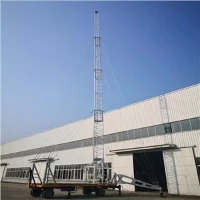


A microwave antenna, also known as a radio frequency antenna, is a type of transducer that is designed to send and receive electromagnetic signals in the microwave frequency range. It is an essential component of telecommunications systems, such as in satellite communications, radar, and wireless systems.
Microwave antennas come in a variety of shapes and sizes, depending on their specific application. The most common types include dipole, patch, horn, parabolic, and helical antennas. Each type has its own unique design and is optimized for a specific range of frequencies, power levels, and directional properties.
Dipole antennas are the most basic type of microwave antenna and are composed of two wires or rods that are a fraction of the wavelength long. They are omnidirectional and are used for both transmission and reception. Patch antennas are typically flat and are used in applications where a low-profile antenna is required, such as in mobile phones, Wi-Fi routers, and satellite TV receivers.
Horn antennas are shaped like a funnel and are used for high-power transmission and low-loss reception. Parabolic antennas are dish-shaped and are used for long-range point-to-point communication, such as in satellite communications and radio telescopes. Helical antennas are coiled and are used in applications where circular polarization is required, such as in GPS systems and satellite communications.
Microwave antennas are critical components of modern telecommunications systems, and as technology advances, their importance will only continue to grow. They enable communication across vast distances and are used in a variety of applications, including but not limited to weather forecasting, air traffic control, military communications, and global positioning systems.
In summary, microwave antennas are essential for modern telecommunications systems and enable communication across vast distances. They come in a variety of shapes and sizes and are optimized for specific applications. As technology evolves, their importance will only increase, and they will continue to play a vital role in the field of telecommunications.