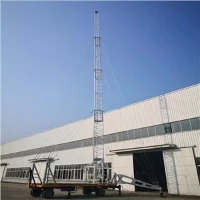


Microwave Tower Introduction
Microwave towers are tall structures that are used to transmit microwaves over long distances. These towers play an important role in many industries, including telecommunications, transportation, and military operations.
Telecommunications
One of the primary uses of microwave towers is in the telecommunications industry. These towers are used to transmit voice and data signals, allowing people to use cell phones, watch TV, and access the internet. Microwave towers are also used to connect remote locations, such as oil rigs, to communications networks. Because microwaves are not subject to interference from weather or other factors, they are a reliable way to transmit signals over long distances.
Transportation
Microwave towers are also used in the transportation industry to support radar systems that aid air traffic control and shipping navigation. Radar systems use microwaves to measure the distance and speed of objects, allowing controllers to safely guide planes and ships.
Military Operations
Microwave towers play an important role in military operations, where they are used to support communications and radar systems. In areas with poor infrastructure, such as developing countries or war zones, microwave towers can be quickly deployed to establish communications networks. Microwave towers are also used for surveillance, allowing military personnel to monitor the movements of enemy forces.
Advantages
1. Wide Area Coverage
Microwave tower has the ability to cover a very large geographical area, which makes it ideal for use in remote locations where it may be difficult or expensive to install other types of infrastructure. A single tower can provide coverage for hundreds of square miles, which makes it possible for people living in rural areas to access mobile phone and internet services.
2. Cost-effective
Microwave tower is a cost-effective form of telecommunications infrastructure. It requires relatively little maintenance and can be installed quickly and easily. This makes it an attractive option for telecommunications companies looking to expand their coverage without having to spend a lot of money.
3. Reliability
Microwave tower is a very reliable form of telecommunications infrastructure. It is designed to withstand harsh weather conditions, such as high winds and heavy rain, and can continue to operate even during power outages. This makes it essential for emergency services and other critical applications where downtime is not an option.
4. Flexibility
Microwave tower is a flexible form of telecommunications infrastructure. It can be used to provide a wide range of services, including mobile phone, wireless internet, and other forms of data transmission. It is also compatible with a variety of different types of wireless devices, which makes it easy for people to connect their devices to the network.
5. Scalability
Microwave tower is a scalable form of telecommunications infrastructure. It can be expanded quickly and easily by adding additional towers to the network. This makes it possible for telecommunications companies to keep pace with the growing demand for mobile phone and wireless internet services.
6. Security
Microwave tower is a secure form of telecommunications infrastructure. It is designed to prevent unauthorized access and can be monitored remotely to ensure that it is operating as expected. This makes it essential for businesses and government agencies that need to protect confidential information.
7. Environmentally friendly
Microwave tower is an environmentally friendly form of telecommunications infrastructure. It generates very little noise pollution and does not emit harmful chemicals or gases. This makes it an attractive option for people who are concerned about the environmental impact of modern technology.