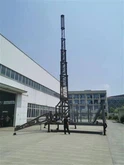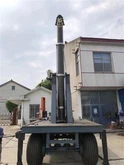


Communication towers are structures designed to support antennas for wireless communication and broadcasting. These towers must be welded to ensure their strength and stability. Welding for communication towers involves several specific steps and techniques.
1. Preparation
Before welding, the tower must be thoroughly cleaned and inspected. This includes removing any rust, debris, or contaminants that could affect the welding process. The tower should also be checked for any signs of damage or wear that could compromise its structural integrity.
2. Welding Techniques
Welding for communication towers typically involves two main techniques: MIG welding and TIG welding.
MIG (Metal Inert Gas) welding uses a consumable wire electrode to create an arc with the workpiece. The wire is fed through the welding gun and melts into the joint, creating a strong bond. This process is commonly used for welding thin to medium-thickness metals.
TIG (Tungsten Inert Gas) welding uses a non-consumable tungsten electrode to produce the arc. The welder manually adds filler metal to the joint and controls the heat and intensity of the arc. TIG welding is ideal for producing high-quality welds in materials such as stainless steel and aluminum.
3. Post-Welding
After welding is completed, the tower must be inspected again to ensure there are no defects or flaws in the welds. The tower may also require additional treatments, such as galvanizing or painting, to protect it from corrosion and weathering.
Welding for communication towers involves thorough preparation, specific welding techniques, and post-welding inspections and treatments. These steps are critical for ensuring the strength and stability of the tower and maintaining the integrity of the wireless communication system.
Welding communication towers require several tools, including:
1. Welding machine: a device that uses electricity to melt and join metal parts.
2. Welding electrodes: metal rods that are used to conduct the electric current and form the weld.
3. Protective gear: gloves, helmets, and masks that protect the welder from sparks and ultraviolet light.
4. Cutting torch: a tool that uses oxygen and a flammable gas to cut through metal.
5. Grinders: power tools used to smooth out rough edges and welds.
6. Clamps: devices used to hold metal pieces together during welding.
7. Measuring tools: such as calipers and rulers, used to ensure proper alignment of metal pieces.
8. Hand tools: such as pliers, wrenches, and hammers, used for various tasks during welding.
9. Safety equipment: such as fire extinguishers and first aid kits, in case of emergencies.
10. Ladders and scaffolding: used to access the upper portions of the tower.
Welding plays a vital role in the construction of communication towers. The towers are exposed to harsh environmental conditions such as high wind loads, seismic activity and extreme weather conditions, and they must be constructed to withstand these forces. Welding provides a reliable bonding method to join the tower’s structural components, creating a sturdy and stable structure. A well-welded communication tower ensures safety for the operators and the public by preventing structural failure, and it also enhances network reliability by preventing signal disruption. Properly welded joints ensure that the tower can withstand lateral forces and loads, including those exerted by the antenna and the equipment mounted on the tower. Therefore, welding is an essential component of the construction of communication towers and must be performed with utmost precision and quality to ensure the longevity and safety of the structure.