

Introduction
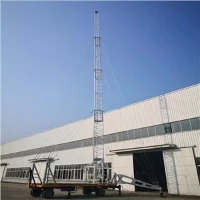
Communication towers are essential infrastructures for modern society, enabling the transmission of wireless signals, television and radio broadcasts, and internet connectivity. These towers need to be constructed with high accuracy and precision, ensuring durability and reliability in harsh environments. Welding technology plays a significant role in the manufacturing, installation, and maintenance of communication towers.
Importance of welding technology for communication towers
Communication towers are typically constructed from steel, which requires welding to join the various parts into a single structure. Welding is a crucial joining method for communication towers because it provides strong, durable bonds that can withstand high wind loads, seismic events, and other adverse conditions. The quality of welding has a direct correlation to the tower's safety, performance, and longevity.
In addition to the tower's physical structure, welding is also necessary for mounting antennas, brackets, and other equipment onto the tower. Welding methods such as fillet welding, butt welding, and lap welding are commonly used to join these components securely. Welding is particularly crucial for mounting wind turbines on communication towers, where the quality of welding can affect the performance and safety of the turbine.
Welding is also essential for the repair and maintenance of communication towers. When towers suffer damage, welding can be used to repair the damaged parts, restoring the tower's structural integrity. Welding can also be used to upgrade an existing tower, such as increasing its height or adding more antennas to increase its capacity.
Welding technology plays a vital role in the manufacturing, installation, and maintenance of communication towers. Proper welding techniques and materials ensure strong and durable bonds that can withstand harsh environmental conditions and seismic events. In addition, advances in welding technology, such as automation, laser welding, friction stir welding, and hybrid welding, continue to improve the quality, efficiency, and safety of welding for communication towers. By incorporating advanced welding techniques, communication towers can be built to withstand the ever-increasing demands of modern communication systems.