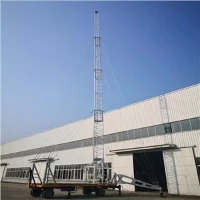


Introduction
Telecommunications communication towers are used for broadcasting radio and television signals, cellular service, wireless internet, and air traffic control, among other applications. These tall structures are exposed to wind loads which may cause structural damage and failure, resulting in significant financial and safety consequences. Therefore, it is crucial to understand the impact of wind loads on communication towers to ensure structural safety and reliability.
Wind speed basics
Wind speed is a crucial factor in the assessment of wind loads on communication towers. Wind speed is defined as the speed of the air moving horizontally with respect to the earth's surface. It is measured in miles per hour (mph), meters per second (m/s), and kilometers per hour (km/h). The wind speed depends on various factors such as atmospheric stability, wind direction, terrain roughness, and time of the day.
Wind loads on communication towers
Wind loads on communication towers are classified into three types: static load, steady wind load, and gust wind load.
1. Static Load
Static load is a stationary load that generates a constant load on the structure. Static wind loads are caused by the weight of the structure and any equipment mounted on it, such as antennas, lightning rods, and guy wires.
2. Steady Wind Load
Steady wind loads cause a constant pressure on the structure in a steady state. A steady wind load is caused by the wind blowing continuously in one direction at a constant speed.
3. Gust Wind Load
Gust wind loads are non-stationary forces that cause pressure fluctuations and vibrations in the structure. A gust wind load is caused by fluctuations in the wind speed and direction, which create sudden pressure changes in the structure.
Factors affecting wind loads
Several factors affect wind loads on communication towers, including:
1. Height of the tower
The height of the tower significantly impacts wind loads. As the height increases, wind speed and wind loads also increase, making it necessary to design taller towers to withstand higher wind loads.
2. Terrain
The surrounding terrain, like mountains, valleys, and urban areas, can significantly affect wind loads on communication towers. Rough terrain can cause turbulence, leading to unpredictability in wind loads.
3. Wind direction
Wind direction also plays an important role in wind loads on communication towers. Wind loads are typically higher when the wind direction is perpendicular to the tower's face than when it is parallel.
4. Atmospheric stability
Atmospheric stability is another significant factor affecting wind loads. If the atmospheric stability is unstable, the wind turbulence will be higher, leading to higher wind loads.