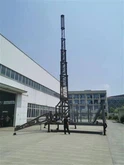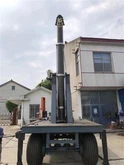


A self-supporting tower is a type of telecommunications tower that does not require any external support or guy wires to stay upright. It stands alone and is supported only by its own framework. The tower is designed to withstand the weight of the equipment it supports, as well as wind and other forces, without buckling or collapsing. The structure of a self-supporting tower typically includes the following components:
1. Base: The base of the tower is the foundation on which the entire structure is built. It is typically made of reinforced concrete and is buried deep into the ground to provide stability.
2. Tower legs: The legs of the tower form the main vertical support structure. They are typically made of steel and are welded or bolted together to form a triangular or square lattice structure.
3. Diagonal braces: Diagonal braces are used to reinforce the tower legs and prevent them from bending or buckling under high wind loads. They are typically made of steel rods or cables and are attached to the tower legs at regular intervals.
4. Horizontal beams: Horizontal beams are used to connect the tower legs and form the main platform for the antennas and other equipment. They are typically made of steel and are bolted or welded to the tower legs.
5. Antenna mounts: Antenna mounts are located at the top of the tower and are used to hold the antennas and other equipment. They are typically made of steel and are bolted or welded to the horizontal beams.
6. Lightning protection: Lightning protection is built into the tower to prevent damage from electrical storms. It typically includes lightning rods and grounding systems to direct electrical current away from the tower.
7. Access ladder: An access ladder is typically attached to the tower legs to allow technicians to climb up and down the tower for maintenance and repair work.