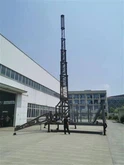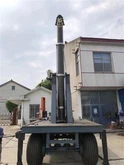


Communication towers have become an essential infrastructure for the modern world. From cell phone towers to broadcast towers, these structures help facilitate the transmission of communication signals across vast distances. While communication technology has undergone many changes over the years, the need for strong and durable communication towers has remained constant.
Steel is the most common material used for communication tower construction. It is strong, durable, and relatively inexpensive. Steel towers are commonly used for cell phone towers, broadcast towers, and other communication applications. The strength of steel allows for the construction of tall towers that can support the weight of heavy antennas and other communication equipment. Steel towers can also withstand harsh weather conditions, such as heavy winds and lightning strikes.
Communication towers are used to support various communication equipment and are erected high up in the air. In order to ensure the longevity and durability of these towers, they are coated with a layer of hot-dipped galvanized steel. This process is known as hot-dip galvanization or simply known as hot-dip.
Hot-dip Galvanization Process
Hot-dip galvanizing is a process of applying a protective zinc coating to steel or iron to prevent rusting or corrosion. The process involves immersing the steel or iron in a bath of molten zinc at a temperature of around 450 degrees Celsius. During the process, the steel or iron is carefully cleaned and prepared to ensure that the zinc coating adheres properly.
Before the steel or iron is dipped into the bath, it is thoroughly cleaned to remove all impurities such as rust, dirt, and oil. This is necessary to ensure that the zinc coating adheres properly and to prevent the formation of any voids. Once the steel or iron is cleaned, it is immersed into the molten zinc bath, which coats the surface of the metal with a layer of zinc.
After the metal has been coated with zinc, it is removed from the bath and allowed to cool. The zinc layer on the metal can then be inspected for any defects or imperfections. If any defects are found, they can be removed by grinding or sandblasting. Once the zinc layer has been inspected and approved, the steel or iron is ready for use.
Importance of Hot-dip Galvanization in Communication Towers
Communication towers are typically exposed to harsh weather conditions, including wind, rain, snow, and extreme temperatures. Hot-dip galvanization provides a durable and long-lasting protective coating that helps to prevent rust and corrosion on the surface of the tower.
In addition to protecting the tower from the elements, hot-dip galvanization also provides a smooth and consistent finish that is aesthetically pleasing. The zinc coating gives the towers a silver-gray appearance that is often preferred by designers and architects.
Hot-dip galvanization also provides a cost-effective solution for protecting communication towers. The process is relatively simple and inexpensive when compared to other protective coatings. Additionally, the zinc coating can last for several decades with very little maintenance, which makes it a cost-effective choice for communication tower construction.
Hot-dip galvanization is an important process in the construction of communication towers. It provides a durable and long-lasting protective coating that helps to prevent rust and corrosion on the surface of the tower. Hot-dip galvanization also provides a smooth and consistent finish that is aesthetically pleasing, and it's a cost-effective solution for protecting communication towers. It's a reliable and efficient way to ensure that the towers are safe and secure for long-term use.