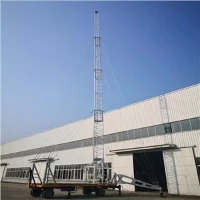


Concealment trees are a type of artificial tree that is designed to camouflage communication towers. These trees blend in with the surrounding natural environment, providing a more visually appealing option than traditional steel towers. They are used in a variety of settings, including urban environments, parks, and residential areas. They can enhance communication tower aesthetics without compromising their functionality.
History of Communication Towers
Communication towers have been around for centuries, serving as a means to transmit messages across long distances. Early communication towers were made of wood, and their main purpose was to facilitate visual communication through the use of signal fires. As technology advanced, communication towers were erected to support telegraph lines, then radio and television broadcasts, and finally, cellular networks.
However, with the advent of modern communication technology, towers were no longer just utilitarian structures; they became iconic symbols of modernity and technological advancement. This led to an increasing demand for aesthetically pleasing communication towers, especially in urban environments, where their stark metal design stood out from the natural environment.
The Emergence of Concealment Trees
In the early 1990s, communication tower designers responded to this growing need by developing concealment trees. These structures were designed to look like real trees and blend in with the natural environment. The first concealment tree was erected in Orange County, California, in 1992. Since then, the concept has spread throughout the United States, and today, it is used in many countries around the world.
How do Concealment Trees Work?
Concealment trees are designed to be visually appealing, while at the same time, fulfilling the functional requirements of communication towers. These artificial trees are made of natural materials such as wood, bark, and leaves. They are constructed on a steel frame, which is then wrapped in synthetic bark, fabricated leaves, and other natural materials to imitate the appearance of a real tree.
The steel frame is designed to support the antennas, microwave dishes, and other hardware necessary for communication equipment. While the tree serves as a visual camouflage to distract from the antenna's location, it also has hidden panels that allow access to internal components for maintenance and repair.
Benefits of Concealment Trees
The benefits of concealment trees are numerous. They provide environmental, aesthetic, and economic benefits.
Environmental Benefits
Concealment trees can help to mitigate the environmental impact of traditional communication towers. Traditional towers often affect bird migration patterns, pose a risk to wildlife, and disrupt the natural landscape. Concealment trees have a more natural look that makes them less obtrusive and more environmentally responsible.
Aesthetic Benefits
Concealment trees blend into the natural environment, providing a more aesthetically pleasing option than traditional towers. They help to reduce visual clutter and do not draw attention to themselves, which is particularly important in residential areas and natural parks. By providing a more natural look than traditional towers, concealment trees improve the overall visual quality of the landscape.
Economic Benefits
Concealment trees can also provide economic benefits. They often have lower maintenance costs than traditional towers, which can be expensive to maintain and may require frequent repairs. Concealment trees also increase property values and promote tourism, making them an attractive investment for developers, homeowners, and park managers.
Concealment trees are an innovative and attractive solution to the problem of unsightly communication towers. They provide numerous benefits, including environmental, aesthetic, and economic advantages. They are now used in many countries around the world, and their popularity continues to grow as urban and residential areas seek to maintain their natural landscapes without compromising modern communication technology. By utilizing this technology, we can successfully bridge the gap between technological advancement and ecological harmony.