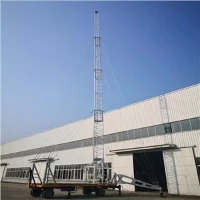


The Cell Phone Base Station, also known as a cell site or a cell tower, is a key component in the telecommunications infrastructure that enables wireless communication services. It is essentially a radio transceiver station that is designed to transmit and receive signals to and from mobile devices within a specific geographic area.
A Cell Phone Base Station typically consists of a tower or mast that supports antennae, along with a base station unit (BSU) and a radio frequency (RF) unit. The BSU is responsible for processing and managing the calls and data traffic that pass through the base station, while the RF unit handles the transmission and reception of signals to and from mobile devices.
In order to provide coverage over a wider area, multiple Cell Phone Base Stations are often deployed in a network. These base stations are interconnected through landline or fiber optic connections to form a wireless network, allowing mobile devices to seamlessly switch between cells as they move around.
The location of Cell Phone Base Stations is critical in ensuring network coverage and reliability. Mobile network operators typically invest in strategic locations that provide optimal coverage and capacity, such as on rooftops, on tall buildings, or in remote areas where there is little or no existing coverage.
Cell Phone Base Station is a critical component in the wireless telecommunications infrastructure, enabling mobile devices to communicate with each other and access network services. With the advent of new technologies like 5G, the role of base stations is only set to become more important in meeting the growing demand for high-speed data services.