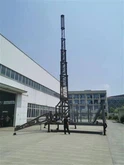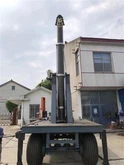


Communication towers are an essential component of modern telecommunications infrastructure. They are used to support broadcasting, cellular, and other forms of wireless communication. The towers are critical in ensuring the transmission and reception of signals over long distances. However, with the increase in the need to communicate over long distances, communication towers are becoming more exposed to environmental factors that threaten their structural integrity. One of the significant factors that affect the lifespan of communication towers is corrosion. Corrosion is the gradual deterioration of materials as a result of chemical or electrochemical reactions with their environment.
Causes of Corrosion in Communication Towers
Corrosion in communication towers is a result of various factors such as:
1. Atmospheric conditions- This includes rain, wind, snow, and humidity. Moisture promotes corrosion by allowing oxygen to react with metal surfaces, resulting in the formation of rust.
2. Chemical factors- Corrosive substances such as salt and acid rain can cause severe damage to metal surfaces.
3. Electrical potential- Uneven electrical potential between different parts of a metal structure can cause corrosion.
4. Physical stress- Bending, denting, and scratching of metal surfaces can damage protective coatings, increasing the likelihood of corrosion.
Anticorrosion Treatments for Communication Towers
Anticorrosion coatings are specialized coatings designed explicitly to prevent corrosion. They have a high resistance to moisture, salt, and other corrosive substances and are suitable for use in harsh environments.
Galvanization
Galvanization is a process of applying a layer of zinc to a metal surface to protect it from corrosion. The zinc coating acts as a sacrificial anode, which corrodes in place of the metal surface. Galvanization can be done through two methods: hot-dip galvanizing and electroplating.
Hot-dip galvanizing is a process of immersing a metal surface in a bath of molten zinc. The zinc adheres to the metal surface, creating a protective layer that is highly resistant to corrosion. Hot-dip galvanizing is suitable for large communication towers, but it can be expensive.
Electroplating is a process of applying a layer of zinc to a metal surface using an electrical current. The process creates a uniform layer of zinc on the metal surface, providing excellent corrosion protection. Electroplating is suitable for smaller communication towers and is less expensive than hot-dip galvanizing.
Communication towers are essential infrastructure that allows us to communicate over long distances. However, the towers are susceptible to corrosion, which can compromise their structural integrity and lifespan. To prevent corrosion, protective coatings or galvanization can be applied. The choice of anticorrosion treatment depends on the severity of the corrosive environment, materials used, and expected lifespan of the communication tower. The adoption of effective anticorrosion treatments ensures that communication towers provide reliable and efficient services for an extended period.