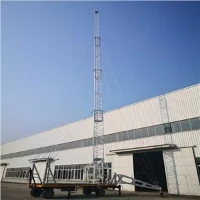


What is a Cell Tower?
Cell towers, also known as cell sites, are where electric communications equipment and antennae are mounted, allowing the surrounding area to use wireless communication devices like telephones and radios.
Cell towers are usually built by a tower company or a wireless carrier when they expand their network coverage or capacity, providing a better reception signal in that area. Cell towers are basically everywhere across the United States, although some cities have more than others. And Millman Land was there since the late 1990s, ensuring that the cell towers are all properly inspected.
There are currently more than 307,000 cell towers in the United States. Sometimes they can be spotted on tops of buildings. Other times cities require cell towers to blend into the cityscape seamlessly. Rural areas sometimes hide them in treescapes, disguising them as a tree.
Our wireless services include cell tower surveys, cell tower audits and As-builts. In this article, we aim to tell you more about cell towers and how they work. We also want to address people's growing concerns over 5G and put to rest the rumors.
How Do Cell Towers Work?
There are over 300 million cell phones being used daily in the United States. Whenever a cell phone is used, it emits an electromagnetic radio wave, called a radio frequency, that is received by the nearest cell tower's antenna.
Once the cell tower receives this signal, it will transmit the signals to a switching center. This allows the call to be connected to either another mobile phone or to a telephone network. It's crazy to think all of this happens in mere seconds.
Related: The Ultimate Guide to ALTA Surveys
Parts of a Cell Tower
The insanely fast technology of a cell tower is due to its parts. You'll hear us mentioning cell carriers a lot in this section. That's because a lot of the parts of a cell tower are provided by individual cell carriers, also known as wireless networks.
There are four wireless networks in the United States that have the best coverage. Right now the top provider is Verizon, which has 70% 4G coverage. AT&T is in close second with 68%. T-Mobile has 62% and Spring is in fourth with 27%, a major decline in coverage.
The Tower
There are actually four different types of cell towers. The first kind is known as a lattice tower. Also called a self-supporting tower, this type of tower offers incredible flexibility. It usually has three or four sides with similar shaped bases.
The second type of tower is a monopole tower. This type of tower features a single steel or concrete tube tower, usually under 50 meters. It only requires one foundation. The antennas are attached to the exterior.
A guyed tower is cost-effective but requires a bigger amount of land. It's usually built 100 meters or greater, connected buy guy wires to anchor and support it. They are attached to the ground in all directions. Most radio and television towers are guyed towers.
The fourth type is the stealth tower, which we briefly touched upon before. Often required by councils, these are more expensive than the other three options but aim to beautify the community they're in. They require additional materials that help them hide in plain sight. While much more appealing, they often do not provide the same amount of capacity for tenants.
The Equipment
The equipment on cell towers includes transceivers and other supporting technology. These are installed in cabinets or shelters or any other way that wireless carriers choose to protect them. Some even create outdoor cabinets on concrete pads or prefabricated equipment shelters.
The Antennas
Alright, we've touched on antennas a lot, but what are they? There are multiple antennas attached to a cell tower, typically mounted on a head frame. Some towers even have up to 15 antennas per carrier. This number really depends on the antenna's performance, coverage and capacity requirements.
Utilities and Access
Carriers will also install utilities at the cell tower site. Each carrier has power to run to the site as well as phone service. Each cell tower also requires access by the carriers for initial installation and ongoing maintenance.