

The need to provide seamless wireless connectivity to millions of devices at blazing speeds has led to 4G reaching its maximum capacity. A new form of connectivity is needed to meet the evolving needs of mobile users and meet society's new digital content consumption habits.
That's where 5G cell towers come into play.
5G will provide faster speeds, greater capacity, ultra-low latency, and better support for Internet of Things (IoT) devices. However, mobile users cannot experience full 5G capabilities unless there is an integrated network of new and upgraded 5G cell towers.
With the increasing demand for new cellular infrastructure, here's everything tower owners and mobile network operators need to know about 5G cell towers to stay ahead of the competition by proactively expanding or upgrading their current tower networks.
What are 5G cell towers and how do they work?
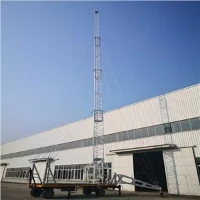
5G towers are telecommunications sites capable of transmitting 5G "new radio" signals for wide-area coverage. Typically 50 to 200 feet tall, they are designed to blend into the natural environment to limit aesthetic impact.
5G cell towers use a combination of low, mid and high frequency bands for a variety of connectivity use cases. For example, macrocellular antennas can be mounted on towers to efficiently provide low-frequency cellular coverage to millions of devices over large areas. Low-band 5G can travel great distances and penetrate walls, windows and other physical barriers.
How do cell towers interact with other 5G infrastructure components?
5G operates on higher frequencies and has more severe signal penetration issues than 3G and 4G. These high-frequency radio waves travel short distances and are easily blocked by certain building materials. To mitigate unwanted propagation, mobile network operators need to densify their networks using mobile infrastructure technologies such as small cells and 5G distributed antenna systems (DAS), as well as traditional macro cell towers.
Discrete small cell networks can provide reliable coverage and capacity in densely populated urban areas by efficiently distributing high-frequency millimeter radio waves originating from distant 5G cell towers. Mobile network operators estimate that they need to install at least 250,000 new small cells across the country to offer 5G at scale.
While small cell technology enhances outdoor connectivity, 5G DAS enhances indoor coverage by distributing indoor 5G to areas that signals from outdoor 5G cell towers cannot reach.