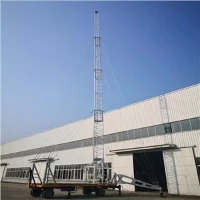


Cell towers are everywhere, but for many, they just blend into the landscape. While people don't usually rethink cell towers, they're absolutely critical to the wireless infrastructure that powers our world.
The terms "cell tower" and "cell site" are often used interchangeably, but in reality, each term stands for something different. Before we dive into the types of cell towers and cell sites you need to know about, here are some quick definitions:
cell site
All equipment (antennas, buildings, and ground) used to transmit cellular signals to and from a mobile device to a receiver. Typically includes transmitter/receiver, GPS, backup power, base station receiver (BTS), backhaul connectivity, and more.
cell tower
The physical structure to which the antenna is connected. Some cell towers can support multiple wireless carriers, public safety entities, or corporate communications. The towers will be owned by wireless carriers or third parties and leased to one or more carriers. As you'll see below, not every type of base station is installed on a base station.
Now that we have the basics down, here are the most common types of cell sites and towers.
Types of Cell Sites
cell tower site
Coverage: 0.5 to 25 miles
Towers are usually thought of when you hear the term "cell site." Cell towers are physical structures designed to support one or more cellular base stations. Read on to learn about the four most common cell towers.
rooftop venue
Coverage: 1.5 to 25 miles
For rooftop systems, antennas and transmission equipment are installed on the roof of the building. The equipment is connected to the utility power on site, and the backhaul fiber optic connection is drawn from the main telephone demarcation point of the building. Sometimes building owners rent out their roofs to wireless carriers if the building is in the best location for a cell site.
small cell
Coverage: 1/10th of a mile to 2 miles per node
Small cells are individual cell sites that are smaller in size, power, and coverage radius than traditional macro cell sites. Small cells are often deployed as part of a network densification program to increase the overall capacity of the network. Because of their size, small cells can be installed almost anywhere, from utility poles to building roofs.
Outdoor Distributed Antenna System (DAS)
Coverage: 1/10th of a mile to 1 mile per node
A Distributed Antenna System, or DAS, is a network of antennas that transmit and receive cellular signals on an operator's licensed frequencies. The outdoor DAS consists of a "hub" that houses the necessary equipment centrally. Antenna locations are strategically spaced to cover the desired area. Antenna locations are called nodes and are connected to hubs by fiber optic cables. There, the nodes are connected with transmission equipment.
Outdoor DAS is often found in areas where zoning regulations make it difficult or impossible to add traditional towers. Antennas are often installed on existing structures, such as utility poles.
Indoor Distributed Antenna System (DAS)
Coverage: Inside buildings
As the name suggests, an indoor DAS contains components intended for indoor use only. These systems are designed to provide coverage for parts of buildings that outdoor macro cells cannot reach. They also expanded the capacity of the network and eased the need for outdoor systems. Indoor DAS are often found in stadiums, arenas, and large commercial buildings (100,000 square feet to over 500,000 square feet)
Base stations, small cells, or repeaters at the front end serve as signal sources, and fiber optics distribute the signal to remote equipment in IT cabinets throughout the building, where the signal is transmitted to end users via coaxial cables and antennas. Interconnected devices are distributed across large facilities, helping to improve connectivity and improve performance.