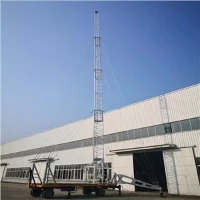


Those pollutants should be treated when the communication tower is anticorrosive
Generally speaking, when carrying out anti-corrosion of communication tower, the surface treatment must be carried out before applying anti-corrosion coating to remove rust, dirt, pollutants and even corrosion adhering to the metal surface of communication tower. Doing so can increase the anti-corrosion and durability of the communication tower, so as to give full play to the role of the coating and achieve a better anti-corrosion effect of the communication tower. However, since the treatment methods used by different materials are not the same, the following will talk about the surface treatment methods of the steel materials used in the communication tower.
The anti-corrosion of communication tower is generally aimed at the anti-corrosion of steel materials, because the material used in all its structures is steel. In the process of processing, storage and transportation of steel materials, the surface will be contaminated by many substances, such as: rust, welding slag, oil stains, mechanical dirt, and old coating films. These contaminants will affect the adhesion of anticorrosive coatings and substrates. , Thereby affecting the anti-corrosion effect of the coating film, so the surface treatment can ensure that the communication tower has a good anti-corrosion effect.
There are many surface treatment methods in the anti-corrosion of communication towers, such as surface purification, degreasing, rust removal, and old paint removal. The main types of pollutants cleaned up in the anti-corrosion of communication towers are as follows.
1. Oxide scale: The scale attached to the steel surface of the communication tower is mainly composed of ferric oxide, ferric oxide and iron oxide. They can easily form hydroxides under the action of oxygen and water, and at the same time, coupled with the effect of temperature, the oxide scale will quickly fall off.
2. Rust: Rust is a relatively loose substance. It has strong water absorption and poor adhesion to the substrate. It is easy to fall off when applying the anti-corrosion paint, so it must be removed in time to ensure the anti-corrosion effect of the communication tower.
3. Soluble salt: many soluble salts such as iron sulfate and sodium chloride will not only directly damage the coating, causing blistering due to the osmotic pressure difference between the inside and outside of the coating film, but also aggravate corrosion due to the conductivity of the soluble salt solution. This is the anti-corrosion and anti-corrosion object of the communication tower.
4. Zinc salt: its presence will affect the adhesion of the anti-corrosion coating, so it must be removed.
5. Grease: Because grease has a large surface tension, it will cause the coating to impregnate the substrate poorly and affect the adhesion.
6. During the anti-corrosion construction of the communication tower, welding fumes, various marks, old coatings, dust, etc. on the surface of the steel will cause the adhesion of the anti-corrosion coating to deteriorate, and must be removed in time to ensure good anti-corrosion effect.