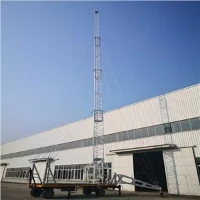


1. As the support of the communication transmission antenna, the tower mast component is an important communication transmission infrastructure. The maintenance of the tower mast structure will directly affect the normal operation of the communication transmission system. Since the tower mast components are working in the open air and subjected to various natural weather and ecological environment for a long time, their performance and structure will be deeply affected. Besides directly affecting the communication safety, the tower mast components are also related to personal safety. Therefore, we must attach great importance to the tower. Maintenance of mast components.
2. The tower contractor shall be responsible for lifelong maintenance. One year after the tower is installed, the verticality of the tower should be re-checked and corrected. After the correction, the contractor of the tower installation should pour the exposed anchor bolts with fine stone concrete to prevent the anchor bolts from corroding.
3. The iron tower is generally inspected once every six months. In addition, every time there is a strong wind above M8, earthquake or other special circumstances, a comprehensive inspection should also be carried out. Someone must be responsible for each inspection, have detailed records, establish maintenance files, and deal with any problems in time.
4. The main content of the inspection:
1) Structural deformation and foundation subsidence. The structural deformation is mainly the verticality of the tower and the bending of the components. Verticality refers to the deviation of the actual axis of the tower from the designed position (axis), and its value is not more than 1/1500 of the measured height. The curvature requirements of the component include that the overall bending of the component is not more than 1/1000 of the length, and the partial bending is not more than 1/750 of the measured length. Pay special attention to the bending condition of the component where the antenna is located during inspection. The subsidence of the foundation shall be measured with theodolite. If the tower is on the roof, check the roof cracking and deformation around the tower base.
2) The tightness of the structural bolt connection. Generally, the bolts of the tower mast structure painted with paint are not easy to loosen, and the bolts of the hot-dip galvanized or hot-sprayed tower mast structure are easy to loosen. When checking the tightness of the bolts, special attention should be paid to the inspection of the bolts at the location of the antenna and the tower column. The bolts should be tightened while checking, and the entire tower should be tightened at once.
3) The tower light wire and the integrity and tightness of the tower light.
4) Structure anti-corrosion and anti-corrosion conditions. The length of the maintenance interval (repainting) for the anticorrosion of the painted surface should be determined according to the type of paint and the atmospheric conditions of the use environment. If it is found that the area of the coating surface is tarnished up to 90%, the area of the coating surface is rough, weathered or cracked up to 25%, the paint film is blistered, or the area of the component is slightly rusted up to 40%, etc., all should be carried out in time Maintain the paint. Whether it is partial or full tower paint depends on the specific situation. If there are rust spots, you should carefully remove the rust spots before painting. Hot-dip galvanizing has good anti-corrosion and anti-corrosion performance, but it is inevitable that some parts of the galvanizing will be damaged during transportation and installation, which will cause easy rust in the future. Once found in the inspection process, rust and paint should be removed in time (partial) .
5) The structure is wrapped in ice. When severe ice-wrapped conditions occur, endangering the safety of the antenna and tower, temporary first aid measures should be taken, such as the use of electric heating to melt the ice-wrapped to reduce the structural load.
6) The maintenance of towers and masts are high-altitude operations. Operators must have a climbing permit, and must strictly implement the safety system to ensure personal safety. Climbing workers should conduct regular physical examinations.