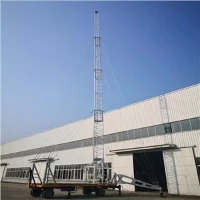


How are AM antennas different from cellular antennas?
Unlike cellular towers, which only support connected cellular antennas, the entire AM tower structure radiates signals as an antenna for an AM radio station. AM towers are often referred to as "hot" because the tower structure is radiating AM signals.
LBA uses two main methods to facilitate the installation of wireless users on hot AM towers. One approach is to isolate the collocated transmission line from the AM tower to prevent interruption of AM transmission, which is achieved with an isolator such as ColoCoil®. Another method involves installing a folded monopole or skirt cable feeder, such as the ColoPole™, on the tower.
With the increasing use of Remote Radio Heads (RRHs), special isolators, such as Hybrid ColoCoil® with fiber coupling, have been introduced to enable placement on AM towers.
Also, some older units use a set of units called capacitive isolators. These are functionally outdated as most cannot handle 4g LTE technology, let alone 5G. These "isolated coupler" systems are also highly susceptible to lightning strikes, as covered in the Verizon case study.
We'll explain the two main methods, and what to look for in general to indicate that a cell tower might be a "hot" AM tower.