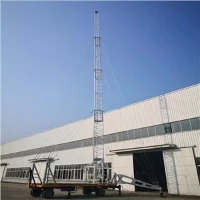



The foundation is the most critical hidden project of the entire telecommunication tower structure, directly determining the stability, wind resistance and service life of the tower. No matter how excellent the tower body fabrication is, unreasonable foundation design will cause structural tilt, displacement or even safety hazards during long-term outdoor operation.
Telecom tower foundation design is strictly based on geological exploration data, including soil bearing capacity, underground water level, soil layer distribution and local wind load standards. Different tower types adopt different foundation solutions. Monopole towers usually adopt single independent circular or square foundation, while lattice towers apply multi-point independent foundation layout to balance overall structural stress.
In the design process, engineers fully consider extreme weather factors such as strong wind, rainwater erosion and seasonal temperature changes. The buried depth, concrete strength, steel bar arrangement and anchor bolt positioning are precisely calculated to ensure effective anti-overturning and anti-sliding performance of the tower base.
Anchor bolt embedding is the core link of foundation construction. The verticality, spacing and elevation of anchor bolts directly affect the installation accuracy and overall flatness of the tower body. Standardized construction and strict detection can effectively avoid assembly deviation and ensure the perfect fit between tower body and foundation.
A qualified tower foundation not only meets the static load and wind load requirements of the tower, but also reserves safety margin for long-term operation and later equipment expansion. Scientific foundation design, together with high-quality hot-dip galvanized tower body, constitutes a complete and reliable communication steel structure system, providing stable and safe infrastructure support for global 4G, 5G and wireless communication projects.