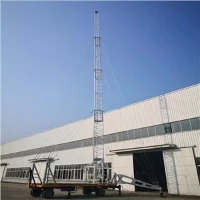


With the continuous development of wireless communication technology, cell towers and Wi-Fi networks have become an integral part of our daily lives. However, many people worry about whether cell towers interfere with Wi-Fi networks at home. This article will explore this issue and provide some solutions.
How Cell Towers Work
Cell Towers are an important part of mobile communication networks, and they transmit data via radio waves. Each tower has a certain coverage area, usually distributed in a hexagonal shape to ensure seamless coverage. The operating frequency of the tower is usually between 700 MHz and 2.6 GHz, depending on the operator and service type.
How Wi-Fi Works
Wi-Fi is a wireless LAN technology that usually operates in two frequency bands, 2.4 GHz and 5 GHz. Wi-Fi networks in the 2.4 GHz band have better penetration capabilities but are susceptible to interference; Wi-Fi networks in the 5 GHz band are faster but have poorer penetration capabilities. Wi-Fi routers send data to surrounding devices via radio waves, and these devices then send data back to the router via radio waves.
Do cell towers interfere with Wi-Fi?
In theory, cell towers and Wi-Fi networks use different frequency ranges and therefore should not interfere with each other. However, in practice, cell towers may interfere with Wi-Fi networks due to various factors. For example:
- Frequency overlap: Although cell towers and Wi-Fi networks use different frequency ranges, in some cases their frequencies may partially overlap, causing interference.
- Signal strength: If a cell tower is close to a Wi-Fi router, its strong signal may interfere with the Wi-Fi network.
- Equipment quality: Some low-quality Wi-Fi routers may not be able to effectively filter out interference signals from cell towers.