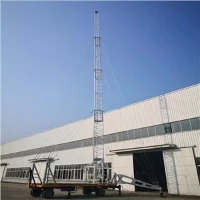


Classification of Towers
Towers are structures that are used for various purposes such as communication, observation, and support for equipment and machinery. They come in various shapes and sizes and can be built from different materials. Here are some of the common types of towers and their classifications:
1. Communication towers
These towers are used for transmitting and receiving signals for communication purposes such as TV and radio broadcasting, cellular phone networks, and internet connectivity. Communication towers can be classified into three types: guyed, self-supporting, and monopoles.
Guyed towers are light-weight towers that are supported by steel cables, which are anchored to the ground. Self-supporting towers, on the other hand, are made up of a lattice structure that is built to support itself without needing any external support. Monopoles are single-pole towers that are used for mobile phone networks.
2. Observation towers
Observation towers are tall structures that are built to provide a panoramic view of the surrounding area. They are commonly used for tourism purposes and are often found in popular tourist destinations such as theme parks and nature reserves. Observation towers can be classified into two types: freestanding and attached.
Freestanding towers are built on their own and are usually made up of a single pole or a lattice structure. Attached towers, meanwhile, are built onto an existing structure such as a building or a mountain.
3. Power transmission towers
These towers are used to support power cables and lines that transmit electricity from power stations to homes and businesses. Power transmission towers can be classified into three types: suspension, tension, and transposition.
Suspension towers are used to support power lines that are suspended between two towers. Tension towers, on the other hand, are used to support power lines that are under tension and need support to prevent sagging. Transposition towers are used to change the direction of power lines.
In conclusion, towers come in various types and classifications depending on their purpose and design. Understanding the different types of towers is important for knowing their functionalities and structures.