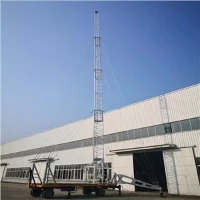


Aviation obstruction light settings
1. Obstacles should mark the highest point and the extreme edge (ie, the apparent height and width) of the obstacle in terms of the setting of the obstacle light.
2. If the top of the object is more than 45 meters above the surrounding ground, an obstruction light must be installed in the middle layer. The distance between the middle layer must be no more than 45 meters and should be as equal as possible (especially for super-high buildings above 100 meters in the city). Consider adding obstruction lights in the middle layer). When installing intermediate-level obstruction lights on buildings located near cities and residential areas, consideration should be given to avoid making residents feel uncomfortable. It is generally required that only scattered light can be seen from the ground.
3. The obstruction lights installed in the large-scale building group should be able to see the outline of the object from all aspects. The horizontal direction can also refer to the obstruction lights with an interval of about 45 meters.
4. For 105-meter-long ultra-high objects, facilities or cable towers, roof towers, etc., a medium-intensity A-type obstruction light should be installed at the top of the object, with white flashing, and a red medium-intensity B-type obstruction should be set on the lower part of it. light.
5. Ultra-high objects higher than 150 meters (such as radio and television towers, long-span cable-stayed bridges, etc.) should be equipped with high-intensity A-type obstruction lights at the top, and medium and high-intensity obstruction lights should be used in conjunction.
6. High-intensity B-type obstruction lights should be installed on the ultra-high-voltage transmission line towers, and the three-layer flashing should be synchronized. The location is the top of the tower, the lowest point of cable sag, and the middle of the two, and it needs to be located outside the tower along the cable routing direction.
7. For chimneys or other buildings of similar nature, the top obstruction lights must be located between 1.5-3 meters from the top. Taking into account the pollution of the chimney to the lamps, the obstruction lights can be installed 4-6 meters below the chimney mouth (detailed See excerpts from national standards).
8. Regardless of the obstruction lights, the number and arrangement of obstruction lights at different heights should be able to see the outline of the object or group of objects from all directions, and the synchronized flashing of the obstruction lights should be considered to achieve an obvious warning effect.