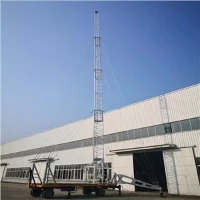



Cell towers, also known as cell sites, are essential components of cellular networks. They consist of antennas that transmit and receive signals to and from mobile devices. These towers communicate with each other and the central switching office to facilitate seamless communication across vast distances.
Directionality of Cell Towers
Antenna Design
The antennas on cell towers are typically omnidirectional or sectorized. Omnidirectional antennas emit signals in all directions, making them non-directional. However, most modern cell towers use sectorized antennas, which focus the signal into specific sectors. This design allows for better coverage and reduced interference between adjacent cells.
Sectorized Antennas
Sectorized antennas are directional. They are designed to cover specific areas, usually in a pie-slice shape. Each sector can cover a 120-degree angle, allowing three sectors to cover a full 360-degree circle. This directional approach helps in efficiently managing the network's resources and improving the overall performance.
Beamforming Technology
An advanced form of directionality in cell towers comes from beamforming technology. Beamforming involves shaping the signal in a way that it is directed towards a specific user or device. This technique can significantly enhance the signal quality and reduce interference for other users in the same cell.
Advantages of Directional Cell Towers
1. Improved Coverage: By focusing the signal into specific sectors, directional cell towers can provide better coverage to targeted areas.
2. Reduced Interference: Directional antennas help minimize interference between adjacent cells, leading to clearer and more reliable communication.
3. Enhanced Capacity: With beamforming technology, cell towers can serve more users simultaneously by directing signals more precisely.
Conclusion
In summary, while traditional omnidirectional antennas are not directional, the majority of modern cell towers employ sectorized antennas that are indeed directional. This directional approach, combined with advanced technologies like beamforming, enhances the efficiency and performance of cellular networks. As the demand for mobile data continues to grow, the trend towards more directional and sophisticated antenna systems is likely to continue.