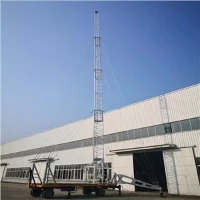


A brief introduction to the tower
The pole tower is used to support the transmission line in the overhead transmission line. The poles and towers are mainly made of steel or reinforced concrete and are the main supporting structure of overhead transmission lines. A pole or tower is a rod-shaped or tower-shaped structure that supports overhead transmission lines and overhead grounding lines and maintains a certain distance between them and the ground. The poles and towers all over the world adopt steel structure, wood structure and reinforced concrete structure.
Wood and reinforced concrete rod-shaped structures are usually called poles, and tower-shaped steel structures and reinforced concrete chimney-shaped structures are called towers. Towers without cables are called self-supporting towers, and towers with cables are called cable towers. China lacks timber resources and does not use wood poles. However, good achievements have been made in the use of centrifugal principles to manufacture reinforced concrete poles and reinforced concrete chimney-shaped span towers.
Towers are one of the basic equipment in overhead distribution lines. According to the materials used, they can be divided into three types: wooden poles, cement poles and metal poles. Cement poles have the advantages of long service life and small maintenance workload, and are widely used. The more commonly used cement rod is the toggle rod, the taper is usually 1/75, divided into ordinary reinforced concrete rod and prestressed reinforced concrete rod.
The grounding of the transmission line tower is very important for the safe and stable operation of the power system. Reducing the grounding resistance of the tower is the main measure to improve the lightning resistance level of the line and reduce the lightning trip rate of the line. Lightning accidents caused by poor grounding of towers account for a large proportion of line failure rates. This is mainly due to the fact that when lightning strikes the top of a telegraph pole or lightning protection line, the lightning current enters the ground through the tower grounding equipment. The ground resistance is too high, resulting in a higher counterattack voltage. In other words, most telegraph poles that are prone to lightning strikes have high grounding resistance. There are many reasons for the high grounding resistance of the tower, including design reasons, structural reasons, and operation and maintenance reasons. However, external natural conditions, such as high soil resistivity, complex geological conditions and construction inconvenience are the main reasons.
The lightning trip rate of the transmission line is closely related to the grounding resistance of the transmission line tower. The high ground resistance part of the transmission line tower is often the part with complex terrain, inconvenient transportation and high soil resistivity. These places are usually areas with strong lightning. Therefore, studying the reasons for the high grounding resistance of the tower and taking effective measures to reduce the grounding resistance of the tower is a very difficult task before us.