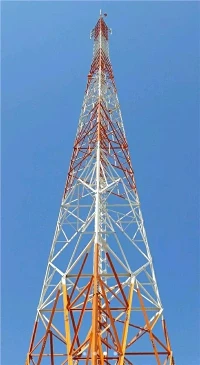

Understanding the wind load capacity of a lattice tower is crucial for various industries, especially in telecommunications and broadcasting. As a leading lattice towers supplier, we are often confronted with questions about the wind load capabilities of our products. In this blog post, we will delve into the concept of wind load capacity, its significance, and how it impacts the design and performance of lattice towers.
What is Wind Load?
Wind load refers to the force exerted by the wind on a structure. When wind blows against a lattice tower, it creates pressure on the tower's surface. This pressure can be divided into two main components: static and dynamic loads. Static wind load is the steady - state force that acts on the tower due to the average wind speed. Dynamic wind load, on the other hand, is caused by the fluctuating nature of the wind, such as gusts and turbulence.
The magnitude of the wind load depends on several factors. Firstly, the wind speed is a primary determinant. Higher wind speeds generate greater forces on the tower. The terrain around the tower's location also plays a role. For instance, a tower located in an open plain will experience different wind patterns compared to one in a densely built - up urban area. The shape and size of the lattice tower are also important. A larger tower with a greater surface area will be subjected to more wind force than a smaller one.
Importance of Wind Load Capacity for Lattice Towers
The wind load capacity of a lattice tower is of utmost importance for its safety and functionality. If a tower is not designed to withstand the wind loads it is likely to encounter, it can lead to structural damage. In extreme cases, the tower may collapse, which can cause significant disruptions to communication networks, endanger lives, and result in costly repairs and replacements.
In the telecommunications industry, reliable communication towers are essential for maintaining seamless connections. A lattice tower with an adequate wind load capacity ensures that cell phone towers, radio masts, and other communication equipment remain operational even during strong winds. For example, during a severe storm, if the tower collapses, thousands of people may lose their communication services.
Calculating the Wind Load Capacity
The calculation of the wind load capacity of a lattice tower is a complex process that involves engineering principles and standards. Engineers typically use the following steps:
-
Determine the Basic Wind Speed: This is the wind speed at a standard height and exposure in the area where the tower will be located. Meteorological data, historical weather records, and local codes are used to estimate this value.
-
Account for the Exposure Category: The exposure category depends on the terrain around the tower. There are different exposure categories, such as open terrain, suburban areas, and urban centers. Each category has a different effect on the wind flow and thus, on the wind load on the tower.
-
Calculate the Wind Pressure: Using the basic wind speed and exposure category, the wind pressure on the tower's surface can be calculated. The formula for wind pressure (P) is (P = 0.00256V^{2}), where (V) is the wind speed in miles per hour.
-
Consider the Tower's Shape and Orientation: The shape of the lattice tower affects how the wind interacts with it. For example, a triangular - shaped lattice tower may have different wind load characteristics compared to a square - shaped one. The orientation of the tower with respect to the prevailing wind direction also needs to be considered.
-
Factor in the Dynamic Effects: As mentioned earlier, dynamic wind loads due to gusts and turbulence need to be accounted for. Engineers use dynamic analysis techniques to estimate these additional loads.
Once all these factors are considered, engineers can determine the maximum wind load that the tower can withstand. This value is then used to design the tower's structure, including the size and type of materials used.
Our Approach as a Lattice Towers Supplier
As a lattice towers supplier, we take the wind load capacity very seriously. Our towers are designed and engineered to meet or exceed the local wind load requirements. We collaborate with experienced structural engineers who use advanced software and calculation methods to ensure the accuracy of the wind load analysis.
We offer a wide range of lattice towers, including Self Supporting Signal Base Station, Telecommunications Wireless Steel Tower, Lattice Telecommunication Tower, Competitive Price High Quality Steel Pipe Tubular Lattice Microwave Telecommunication Tower, and Free Standing Telecom Communication Towers. Each tower is custom - designed based on the specific location and usage requirements.
Before manufacturing a tower, we conduct a detailed site assessment. We collect data on the wind speed, terrain, and other environmental factors at the proposed site. This allows us to design a tower that is optimized for that particular location, ensuring maximum safety and performance.
Materials and Design Features for High Wind Load Capacity
Materials play a crucial role in determining the wind load capacity of a lattice tower. We primarily use high - strength steel for our towers. Steel has excellent mechanical properties, including high strength and ductility, which make it suitable for withstanding high wind loads.
The design of the lattice structure also contributes to its wind load capacity. The open lattice design allows the wind to pass through the tower, reducing the overall wind pressure compared to a solid - walled structure. Additionally, the triangular or square lattice patterns provide inherent stability, distributing the wind forces evenly across the structure.
We also incorporate features such as guy wires in some of our tower designs. Guy wires are cables that are attached to the tower at various heights and anchored to the ground. These wires help to resist the lateral forces caused by the wind, increasing the tower's stability and wind load capacity.
Maintenance and Inspection for Sustaining Wind Load Capacity
Even a well - designed lattice tower with a high wind load capacity requires regular maintenance and inspection. Over time, the tower may be exposed to environmental factors such as corrosion, which can weaken the structure and reduce its wind load capacity.


We recommend that our customers conduct visual inspections of the tower at regular intervals. This includes checking for signs of corrosion, loose bolts, damaged members, and any other visible damage. In addition, more comprehensive structural inspections should be carried out by qualified engineers every few years. These inspections may involve non - destructive testing techniques to assess the internal condition of the steel members.
Contact Us for Your Lattice Tower Needs
If you are in the market for a lattice tower, whether for telecommunications, broadcasting, or other applications, we are here to help. Our team of experts can assist you in determining the appropriate wind load capacity for your specific requirements and provide you with a custom - designed tower solution.
We understand the importance of reliability and safety in your projects, and our lattice towers are built to deliver on both fronts. Contact us to discuss your project in detail and start the process of procuring a high - quality lattice tower.
References
- ASCE 7 - 16: Minimum Design Loads and Associated Criteria for Buildings and Other Structures.
- Manual of Steel Construction, AISC.
- Wind Loading of Structures, E. Simiu and R. H. Scanlan.