


In the dynamic landscape of modern communication, the quest for efficient and reliable infrastructure is ever - present. As a leading monopole tower supplier, I often encounter inquiries regarding the feasibility of using our monopole towers for satellite communication. This blog post aims to delve into the technical aspects, potential advantages, and limitations of utilizing monopole towers in satellite communication systems.
Technical Considerations
1. Signal Propagation and Line - of - Sight
For satellite communication, a clear line - of - sight (LOS) between the ground - based antenna on the tower and the satellite is crucial. Monopole towers, with their vertical and often unobstructed structure, can provide an ideal platform to achieve this LOS. They can be installed in various terrains, from urban areas to rural landscapes, and their height can be adjusted to overcome local obstacles such as buildings or trees.
2. Antenna Mounting
Monopole towers are designed to support different types of communication equipment, including satellite antennas. The smooth and cylindrical structure of a monopole allows for easy installation and adjustment of antennas. The tower's stability is also a key factor, as satellite antennas need to be accurately pointed towards the satellite. Our monopole towers are engineered with high - strength materials to ensure minimal vibration and movement, which is essential for maintaining a stable antenna alignment.
3. Frequency Compatibility
Satellite communication operates across a wide range of frequencies. Monopole towers can be designed to be compatible with these frequencies. For example, the tower's material and construction can be optimized to minimize electromagnetic interference (EMI) at the relevant satellite communication frequencies. This ensures that the signals transmitted and received by the satellite antenna are not degraded by the tower itself.
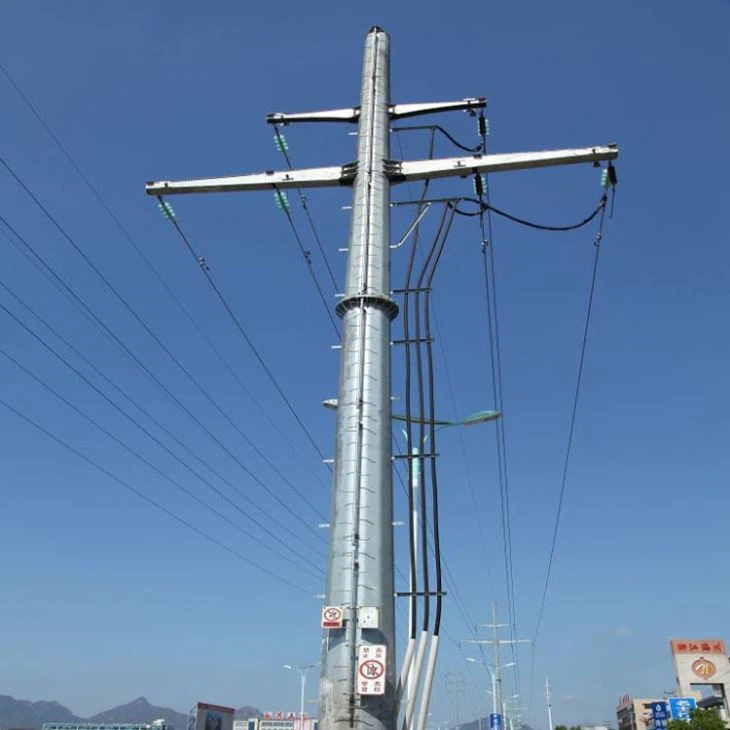

Advantages of Using Monopole Towers for Satellite Communication
1. Space Efficiency
In urban areas where space is at a premium, monopole towers are an excellent choice. Unlike lattice towers that require a larger footprint, monopoles take up less ground space. This makes them suitable for installation on rooftops or in small lots, which can be beneficial for satellite communication systems in densely populated areas.
2. Aesthetic Appeal
Monopole towers are generally more visually appealing than other types of towers. Their sleek and modern design can blend better with the surrounding environment, which is often a consideration in both urban and rural settings. This can be an important factor when obtaining permits for tower installation, especially in areas with strict aesthetic regulations.
3. Cost - Effectiveness
From a cost perspective, monopole towers can be more economical to install and maintain compared to other tower types. They require less material and labor during construction, and their simple design makes them easier to access for maintenance and upgrades. This cost - effectiveness can translate into significant savings for satellite communication providers.
4. Quick Installation
Monopole towers can be installed relatively quickly compared to other tower structures. This is due to their pre - fabricated components and straightforward installation process. For satellite communication projects with tight deadlines, the ability to quickly deploy a tower can be a major advantage.
Limitations and Challenges
1. Height Restrictions
In some cases, the height of a monopole tower may be restricted by local regulations or physical limitations. For satellite communication, a certain minimum height may be required to achieve a clear line - of - sight to the satellite, especially in areas with high - rise buildings or hilly terrain. In such situations, alternative tower structures may need to be considered.
2. Wind and Weather Resistance
Although monopole towers are designed to withstand various weather conditions, extreme winds can pose a challenge. High - speed winds can cause the tower to sway, which may affect the alignment of the satellite antenna. Special engineering measures, such as guy wires or reinforced foundations, may be required in areas prone to strong winds.
3. Load - Bearing Capacity
Satellite communication equipment can be heavy, especially large - scale antennas. The monopole tower needs to have sufficient load - bearing capacity to support the weight of the equipment. Ensuring the tower's structural integrity under the additional load is crucial for long - term reliability.
Our Monopole Tower Solutions
As a monopole tower supplier, we offer a range of solutions tailored to the needs of satellite communication. Our towers are made from high - quality steel, which provides excellent strength and durability. We also offer customization options, including height, diameter, and load - bearing capacity, to meet the specific requirements of different satellite communication projects.
In addition to our standard monopole towers, we also supply related products such as Transmission Line Steel Pole Tower, Power Transmission Steel Poles, and Transmission Line Steel Galvanized Pole Tower. These products can be used in conjunction with our monopole towers to create a comprehensive communication infrastructure.
Conclusion
In conclusion, monopole towers can indeed be used for satellite communication. Their unique features, such as space efficiency, aesthetic appeal, and cost - effectiveness, make them a viable option for many satellite communication projects. However, it is important to consider the technical requirements, limitations, and challenges associated with using monopole towers.
If you are interested in exploring the use of monopole towers for your satellite communication needs, we invite you to contact us for a detailed consultation. Our team of experts will be happy to assist you in selecting the right tower and providing customized solutions to meet your specific requirements.
References
- Johnson, R. C. (2018). Antenna Engineering Handbook. McGraw - Hill Education.
- Balanis, C. A. (2016). Antenna Theory: Analysis and Design. Wiley.
- Telecommunication Industry Association (TIA). (2020). Standards for Communication Tower Structures.


