
Hey there! As a supplier of high masts, I've been thinking a lot lately about how these tall structures fit into the whole smart city concept. So, let's dive right in and figure out if high masts are compatible with smart city systems.
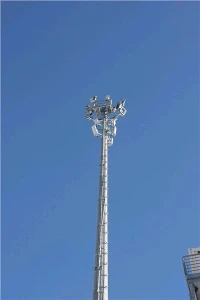
First off, what are high masts? Well, they're those really tall poles that you often see in large open areas like stadiums, ports, or highways. They're used mainly for lighting, but they can also serve other purposes. And smart city systems? These are basically a bunch of tech - savvy solutions that aim to make cities more efficient, sustainable, and livable. Think of things like intelligent traffic management, environmental monitoring, and public safety systems.
Now, let's talk about how high masts can actually play a part in smart cities. One of the most obvious ways is through lighting. In a smart city, energy efficiency is a big deal. High masts can be equipped with smart lighting systems. These lights can adjust their brightness based on the time of day, the amount of natural light available, or even the presence of people or vehicles below. This not only saves energy but also reduces light pollution. For example, in a parking lot lit by high masts, the lights can dim when there are no cars around and brighten up as soon as a vehicle enters.
Another cool aspect is the integration of sensors. High masts can serve as a great platform for mounting all sorts of sensors. Air quality sensors can be placed on them to monitor pollution levels in different parts of the city. Traffic sensors can track the flow of vehicles and help in optimizing traffic signals. These sensors can collect data in real - time and send it to a central control center, where the information can be analyzed and used to make informed decisions.
High masts can also support communication systems. In a smart city, seamless communication is crucial. They can be used to install small - cell base stations for 5G networks. These base stations can improve the speed and reliability of mobile communication in the surrounding area. If you're walking around a smart city, you'll want your phone to work smoothly, right? High masts can help make that happen. Check out 15M Guyed Roof Top Beautified Telecom Tower, which shows how telecom structures can be well - integrated.
But it's not all sunshine and rainbows. There are some challenges when it comes to integrating high masts with smart city systems. One of the main issues is the cost. Installing smart lighting, sensors, and communication equipment on high masts can be pretty expensive. You've got to buy the hardware, pay for the installation, and then maintain it all over time. For cash - strapped cities or smaller municipalities, this can be a real barrier.


Another challenge is the technical complexity. Different smart city technologies may have different requirements in terms of power supply, data transmission, and compatibility. For example, getting a traffic sensor to work seamlessly with a smart lighting system on the same high mast can be tricky. You need experts who understand both the high mast infrastructure and the smart city technologies to make it work.
There are also concerns about the visual impact. High masts are big structures, and some people may not like the idea of them being filled with all sorts of equipment. In a city that values aesthetics, finding a balance between functionality and looks can be a tough task.
However, despite these challenges, I believe that high masts and smart city systems are definitely compatible. With the right planning and investment, high masts can be transformed into multi - functional pillars of smart cities. For example, some cities have already started using high masts for video surveillance. This enhances public safety by providing a wide - angle view of the area below.
Moreover, the long - term benefits outweigh the initial costs and challenges. Energy savings from smart lighting can lead to significant financial savings over time. Improved traffic management can reduce congestion, saving both time and money for commuters. And better environmental monitoring can help cities take proactive steps to improve air quality and overall livability.
Let's look at the power - related aspects. High masts can be part of power transmission and distribution in smart cities. They can support power lines, like the Electric Power Transmission 330kv Galvanized Steel Iron Mono Pole. This is important as smart cities rely on a stable and efficient power supply for all their high - tech systems.
In addition, high masts can be designed to be more sustainable themselves. They can incorporate solar panels on their structure to generate some of the power they need for lighting and sensor operation. This not only reduces the reliance on the grid but also makes the high masts more environmentally friendly.
When it comes to the overall design and planning of smart cities, high masts can be strategically placed. They can be located at key intersections, near public transportation hubs, or in areas with high footfall. This way, they can maximize their functionality and contribute to the overall smart city ecosystem.
As a high mast supplier, I've seen the potential of these structures in smart cities firsthand. We're constantly working on improving the design and functionality of our high masts to make them more suitable for smart city integration. We're looking at better ways to mount sensors and communication equipment, and we're exploring new materials and technologies to make the high masts more energy - efficient.
So, if you're involved in the development of a smart city or are thinking about upgrading your existing infrastructure, high masts are definitely something to consider. We're here to help you with all your high mast needs. Whether you need a high mast for lighting, sensor integration, or communication support, we've got the expertise and the products to make it happen. Contact us to start a conversation about how we can work together to bring your smart city vision to life.
In conclusion, high masts and smart city systems are very much compatible. While there are challenges to overcome, the opportunities they present in terms of efficiency, sustainability, and improved quality of life are immense. Let's embrace the future of smart cities with high masts at the forefront of innovation.
References:
- Smith, J. "The Future of Urban Infrastructure." Urban Tech Journal, 2020.
- Jones, R. "Smart City Technologies: An Overview." Tech & Society Review, 2019.